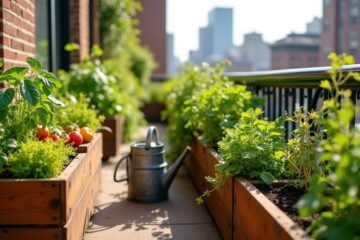
Compact raised bed gardening is your ticket to a bountiful mini oasis! Imagine picking fresh tomatoes and fragrant basil just steps from your door. Start by choosing a sunny spot—about six hours of light a day is golden! Use quality, rot-resistant wood like cedar or go for stylish metal designs. Don’t forget to mix in rich soil with compost for a thriving community of veggies. And if you’re curious how to maximize every inch, there’s more to explore!
Benefits of Raised Bed Gardening in Small Spaces
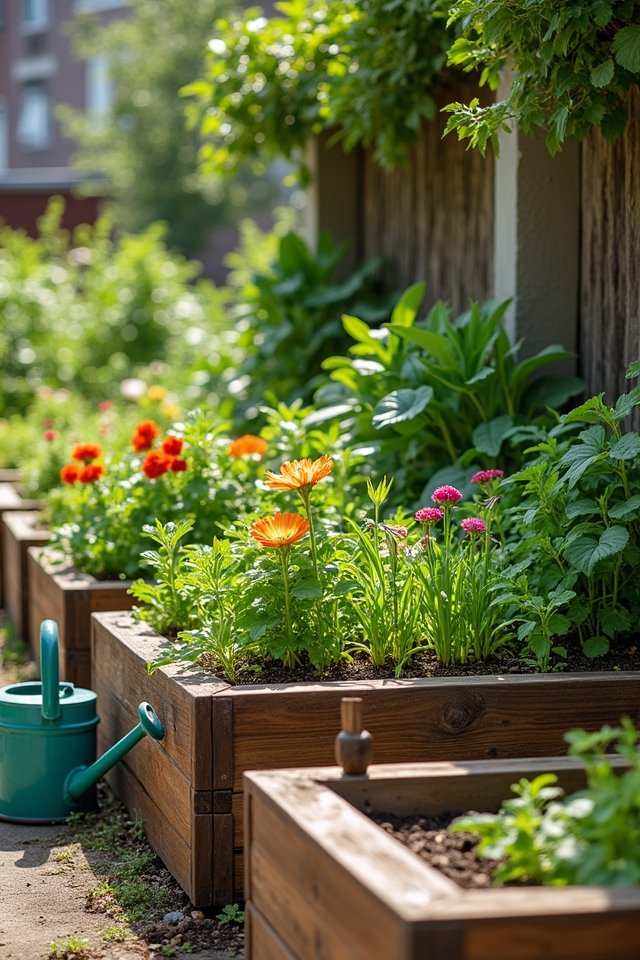
If you’ve ever dreamed of having a lush garden but felt squeezed for space, don’t worry! Raised bed gardening is your ticket to making the most out of tiny areas. Imagine a vibrant garden blooming just outside your window! These elevated beds maximize space utilization, allowing you to grow vegetables or herbs in the tightest urban settings. You can tuck them alongside fences or even on rooftops, creating a green oasis amid concrete jungles. They’re accessible, easy to maintain, and make weeding a breeze—no back-breaking work here! Plus, you’ll have fresher produce at your fingertips. Why settle for a few sad potted plants when you can have a colorful patch of joy? Let innovation lead your gardening journey!
Choosing the Right Location for Your Raised Bed
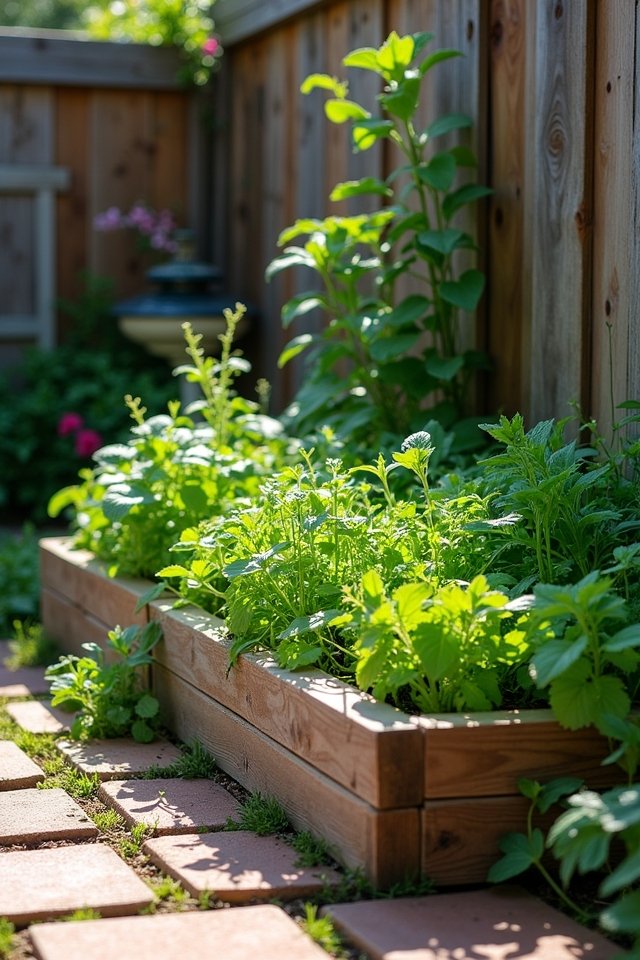
Finding the perfect spot for your raised bed can feel like a treasure hunt! First, let there be light—aim for at least six hours of sunlight exposure daily. Your plants will dance with joy in those glorious rays! Next up, think about drainage considerations. No one wants a soggy garden! Look for a location that drains well, maybe even a slight slope, to keep those roots happy. If you’re stuck with poorly draining soil, try positioning your bed near established trees; they’ll soak up excess water (but avoid their shadow!). Remember, this cozy fortress of greenery should also be accessible for weeding and harvesting. So, grab your compass and explore your space—there’s a perfect spot waiting just for you!
Selecting the Best Materials for Raised Beds
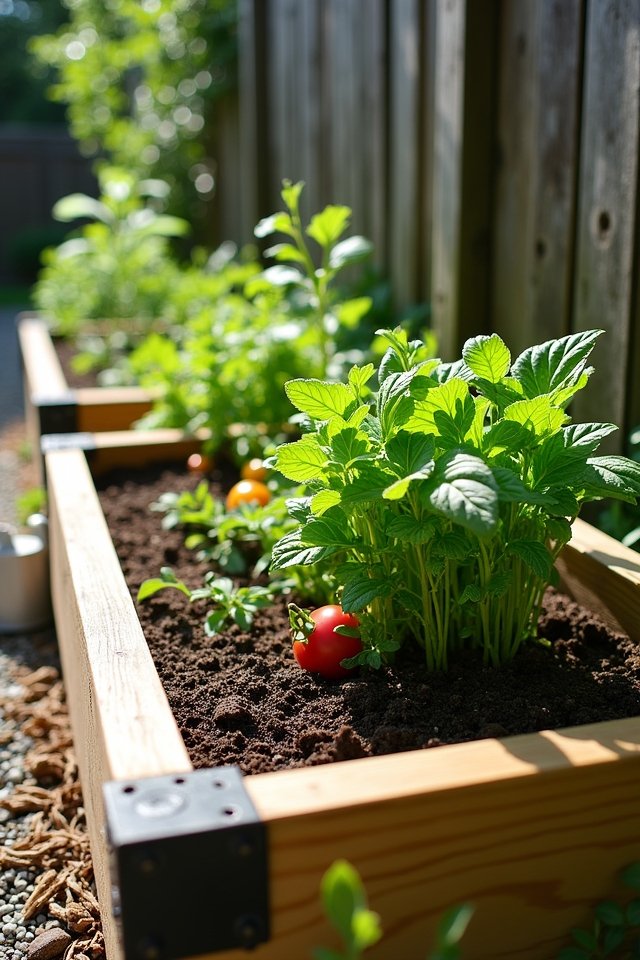
When you think about your raised bed, imagine it as a cozy home for your plants! Selecting the right materials makes all the difference, and you’ve got exciting options. Here’s a handy list to get you started:
- Wood: Classic and rustic, but go for cedar or redwood, as they resist rot!
- Metal: Sleek and modern! They’re durable, but make sure it’s food-safe to avoid rust issues.
- Reclaimed materials: Eco-friendly and full of character; think old pallets or salvaged wood!
- Composite: A blend of recycled plastics and wood fibers, making it durable and eco-friendly!
Designing Compact Raised Bed Configurations
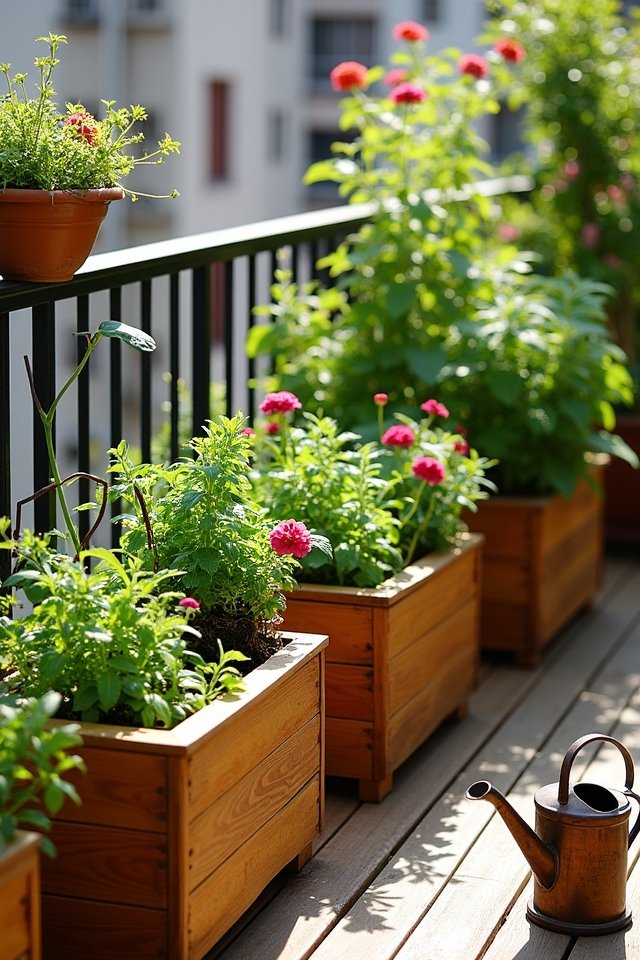
Designing compact raised bed configurations feels a bit like playing Tetris, doesn’t it? You get to fit pieces together in a way that’s both functional and fun! Adopt design principles that maximize your space while keeping planting easy. Think about layout strategies like L-shapes or staggered rows—these can create room for more plants without overwhelming your garden.
Visualize cascading herbs spilling over edges, or vibrant veggies packed into corners—it’s all about efficient use of space! Consider adding vertical features, like trellises for beans, to reach for the sky! Remember, a little creativity goes a long way. So, roll up your sleeves, grab that tape measure, and let’s turn your small plot into a garden paradise worthy of applause! 🌿
Soil and Plant Selection for Optimal Growth
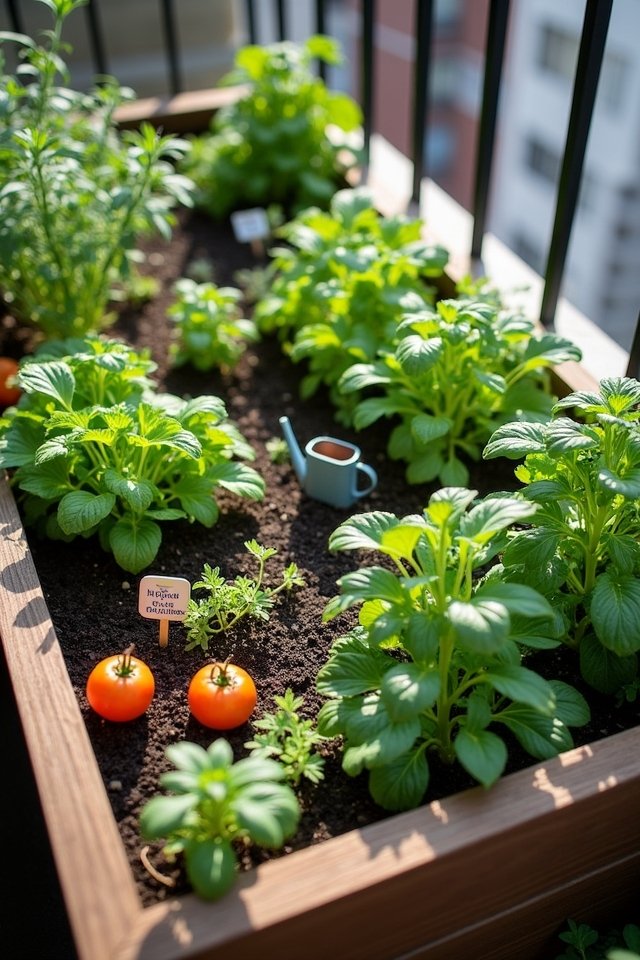
A garden’s soul lies in its soil! Choosing the right mix can spark a thriving oasis, even in tight spots. Start with these essential tips for soil and plant selection:
- Use quality soil amendments like compost and worm castings to enrich your soil.
- Test your pH – optimize it for the plants you want to grow. Most love a pH between 6.0 and 7.0.
- Mind your plant spacing! Crowding can lead to stunted growth—each plant deserves its breathing room.
- Rotate your crops annually to keep the soil healthy and nutrient-rich.
With these strategies, you’ll create a vibrant, flourishing garden! Who knew small spaces could yield such bountiful beauty? Get growing and enjoy the lush rewards ahead!
Vertical Gardening Techniques for Limited Areas
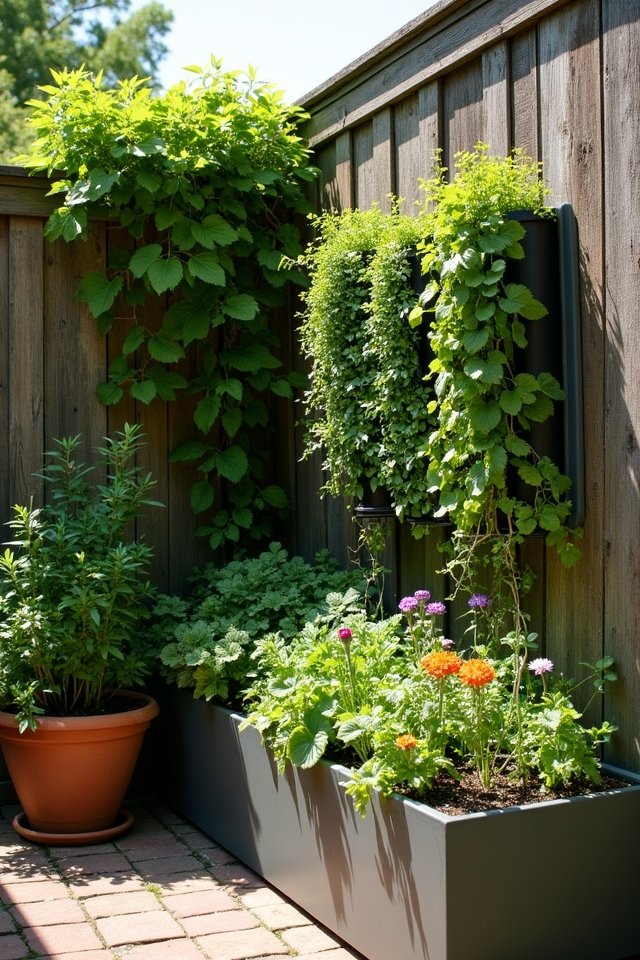
Imagine turning your small outdoor space into a vertical paradise filled with lush plants and colorful blooms! Vertical gardening techniques are your ticket to maximizing every inch! Try using hanging planters to cascade beautiful vines, waving at passersby. You can create stunning wall gardens by attaching pockets or shelves to your fencing—picture strawberries ripening just above eye-level!
Don’t forget to mix textures and colors; vibrant flowers alongside swirling ferns create visual delight! And think about adding some herbs—how delightful it is to snip fresh basil right from your wall! So, grab some sturdy hooks and planters; your vertical garden won’t just save space, it’ll also add joy and beauty to your life! Isn’t that a win-win?
Maximizing Space With Companion Planting
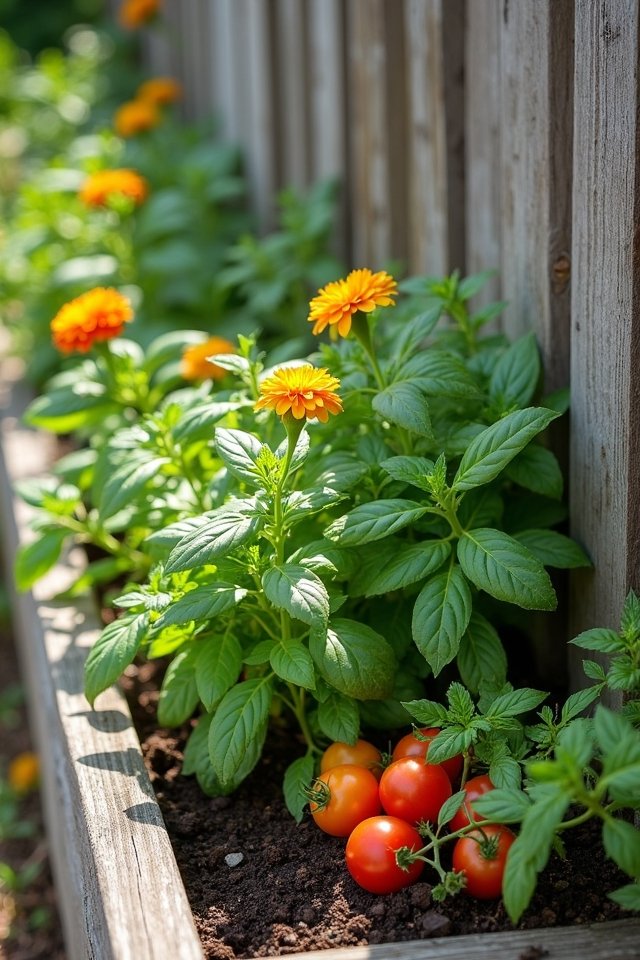
Although your gardening space might feel small, companion planting can turn it into a flourishing ecosystem! By planting specific crops together, you can boost productivity and maximize yield. Here are four dynamic companion plant pairings to supercharge your gardening experience:
- Tomatoes and Basil – They’re best buds, keeping pests away and enhancing each other’s flavors!
- Carrots and Onions – The strong scents of onions deter carrot flies.
- Radishes and Cucumbers – Fast-growing radishes protect young cucumber seedlings while keeping the soil loose.
- Beans and Corn – Beans climb the corn stalks, while providing valuable nitrogen to the soil!
Maintenance Tips for Small Raised Garden Beds
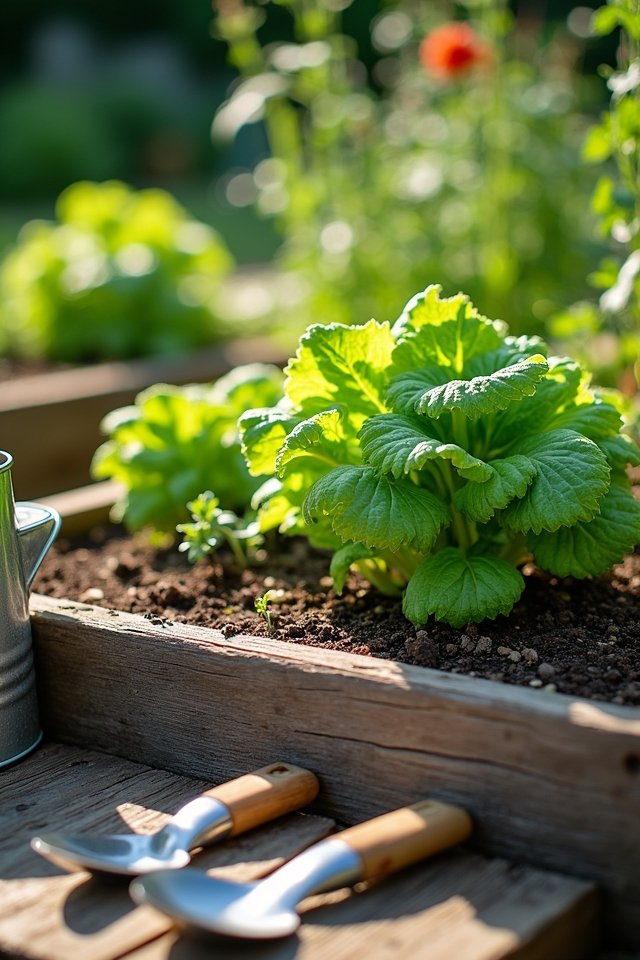
Keeping your small raised garden bed in tip-top shape doesn’t have to feel overwhelming; in fact, it can be downright fun! Start with seasonal maintenance—think of it as giving your plants a spa day. Remove weeds, check soil moisture, and refresh your mulch for that freshly made look!
For pest management, consider introducing friendly bugs like ladybugs or lacewings—think of them as your garden’s very own superheroes! You can even mix essential oils or plant garlic to keep those pesky critters at bay.
Rotate your crops each season; it’s like changing your wardrobe for the weather!
Frequently Asked Questions
How Deep Should a Raised Bed Be for Vegetables?
When you’re planning your vegetable garden, the depth requirements can make a world of difference! For most veggies, a raised bed should be at least 12 inches deep. This depth allows roots to stretch and soak up nutrients, promoting vibrant growth. Think of it as giving your plants a cozy underground home! Just imagine those roots diving deep, searching for water and nourishment, transforming your veggie patch into an abundance of lush greenery! Exciting, right?
What Are the Best Plants for Shaded Raised Beds?
Did you know that almost 50% of gardens end up in the shade? If you’re dealing with this, rejoice! Shade-loving plants can turn dull corners into green sanctuaries. Think vibrant hostas, delightful ferns, and the cheerful impatiens in your container gardens. They thrive in the darkness like rock stars in a spotlight! So, don’t shy away from those shady spots—embrace them, and watch your garden explode with life! Isn’t that exciting?
Can I Use Old Wood for Raised Beds?
Absolutely, you can use old wood for raised beds, but don’t forget about safety concerns! If the wood’s treated, like with harmful chemicals, it might leach into your soil. Imagine growing veggies in a toxic soup—that’s not tasty! Consider using untreated, rot-resistant wood instead, like cedar. It’s like giving your plants a cozy Airbnb! Just make sure it’s clean and sturdy, so your garden thrives with happy, healthy plants! What a fantastic project!
How Often Should I Water My Raised Garden Bed?
You should water your raised garden bed regularly to guarantee those plants thrive! Typically, watering frequency depends on the weather, but aim for about an inch of moisture per week. Picture your plants drinking up that goodness! During hot days, they’ll quench their thirst more often! Check the soil—if it feels dry an inch down, it’s time to refresh! Consistent moisture retention helps create a happy, flourishing garden! Isn’t that exciting?
Are There Pest Control Methods Suitable for Small Spaces?
Imagine walking into your garden, only to find unwelcome guests munching on your plants! But don’t worry; you’ve got options! Natural repellents like neem oil can send those pests packing! Plus, why not try companion planting? Pair up fragrant marigolds with your veggies to confuse nearby critters. It’s like sending in a tiny army to defend your garden! Making your space pest-resistant can be fun and creative—let’s keep those pesky invaders at bay!