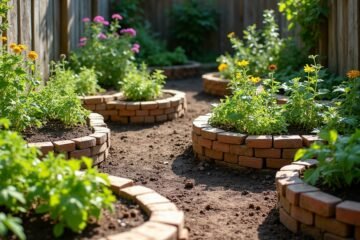
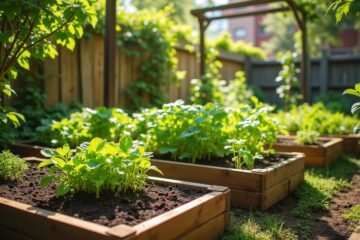
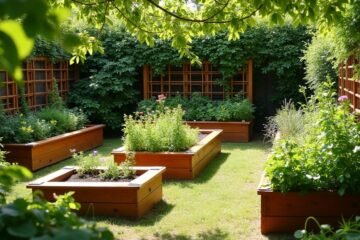
For a thriving raised bed garden in small spaces, start by picking a sunlit spot that gets six hours of light daily—avoid those shady corners! Then, grow fun dwarf veggies like mini peppers or bush beans that flourish without crowding. Maximize space with vertical planters—just imagine your snap peas climbing like happy little acrobats! Don’t forget to mix quality soil amendments, and pair plants like marigolds and tomatoes for a pest-free paradise. Curious about more tips? Stick around!
Choose the Right Location for Your Raised Bed
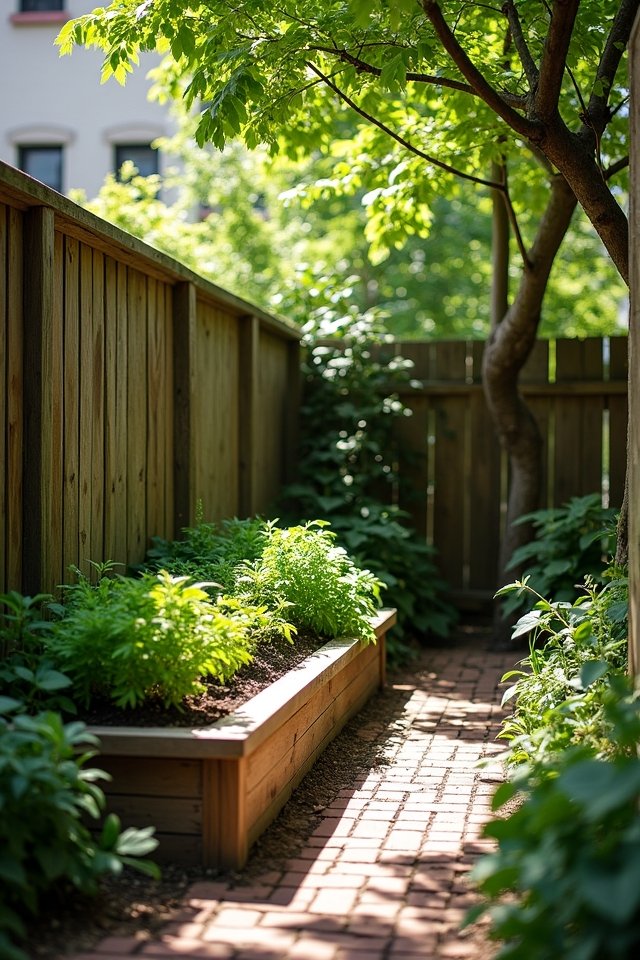
When you’re choosing the right location for your raised bed, it’s like picking the perfect spot for a cozy campfire—just right to soak up the warmth of the sun and avoid any pesky shadows! Aim for a spot with at least six hours of sunlight exposure daily. Think of your plants basking in the sun, smiling as they grow! Also, give drainage considerations some thought. You don’t want rainwater pooling like an unwanted guest at a party! Test the soil by digging a small hole; if it stays wet, that spot’s not it. Choosing wisely will guarantee your garden thrives while sparking joy every time you step outside! So, investigate, visualize, and find that perfect patch! Happy gardening!
Select Space-Efficient Plants
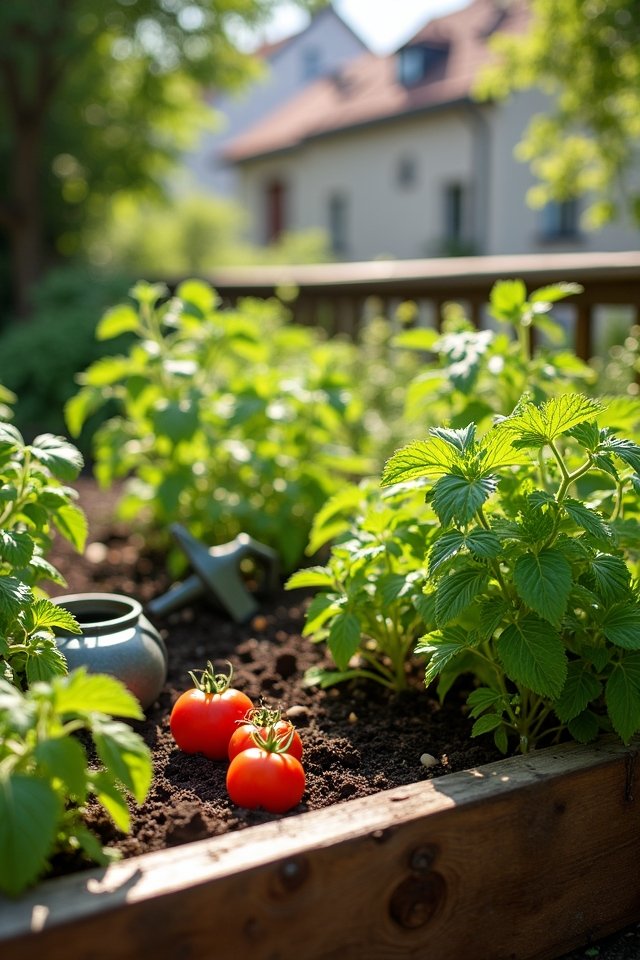
Finding that perfect spot for your raised bed is just the start of your gardening adventure! Now you need to pick plants that won’t take over your entire space. Try selecting space-efficient options, like dwarf varieties that pack a punch in flavor without demanding too much room. You can also explore exciting container options to maximize your greenery. Here are four top choices to contemplate:
- Dwarf tomatoes – They’re juicy and flavorful, plus they stay compact.
- Bush beans – Compact and prolific, they’re perfect for small gardens!
- Miniature peppers – Colorful, flavorful, and perfect for your salsa!
- Herbs – Basil, parsley, and mint thrive beautifully in tiny spaces.
Get creative and make your small space bloom!
Maximize Vertical Gardening Techniques
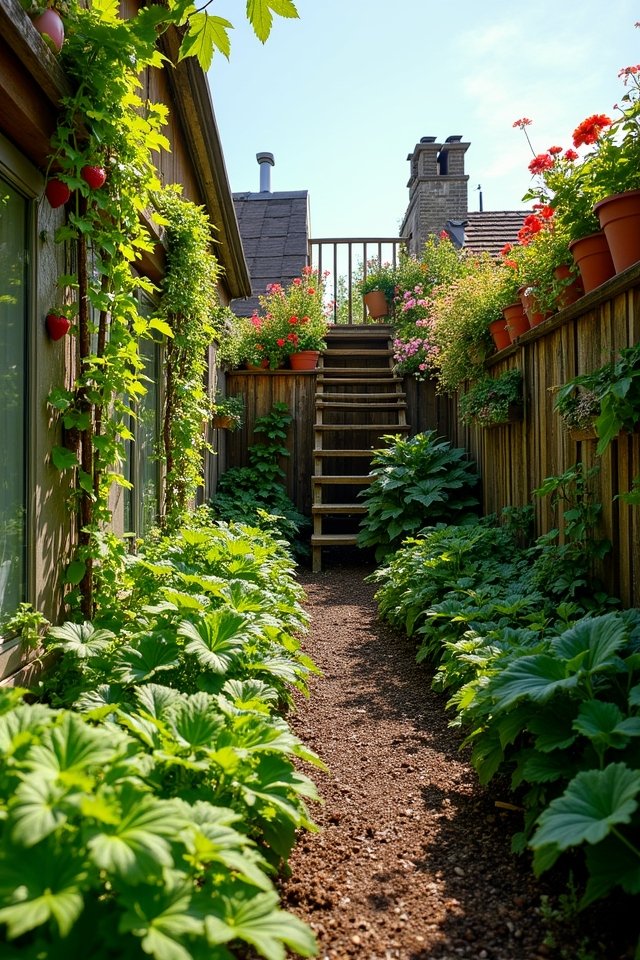
Ready to take your gardening game to new heights? Vertical gardening techniques are your ticket to a lush, green paradise, even in small spaces! Consider investing in vertical planters to maximize your growing area—think of them as skyscrapers for your plants! By training climbing vegetables like snap peas and pole beans to reach upwards, you’ll create an eye-catching green wall that’s both functional and fabulous. Use trellises, ladders, or even repurposed pallets to give your plants the support they crave. Plus, the higher they grow, the easier it is to harvest! Imagine plucking fresh veggies right from your living wall—talk about a garden that packs a punch! Get creative, have fun, and watch your garden soar!
Optimize Soil Quality for Small Spaces
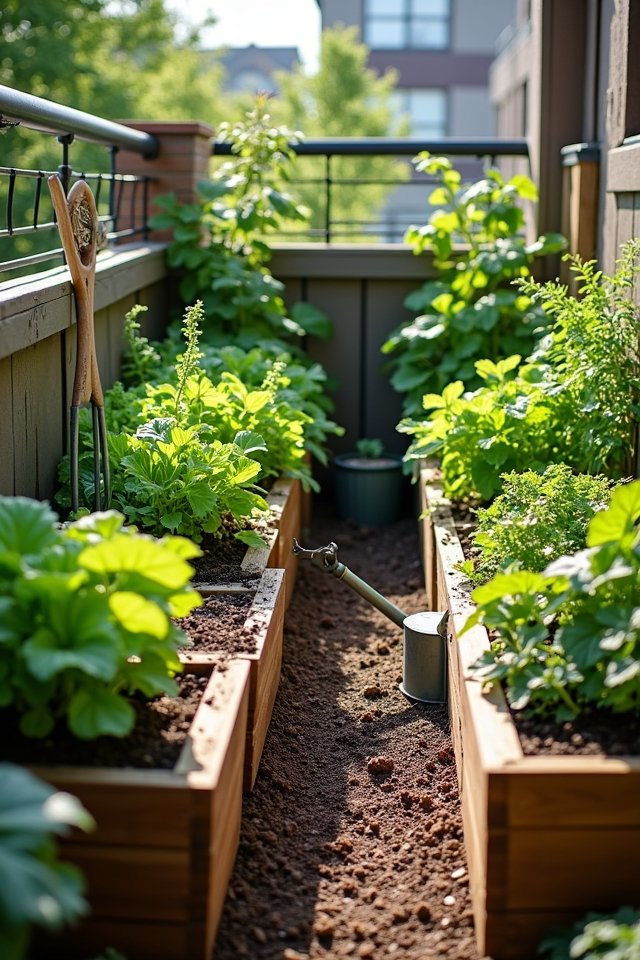
Soaring plants need a solid foundation, and that starts with optimizing soil quality in your raised beds! To create a vibrant micro-ecosystem, consider these four key steps:
- Use Quality Soil Amendments: Enrich your soil with compost, worm castings, or aged manure to provide essential nutrients.
- Prioritize Drainage Solutions: Mix in perlite or gravel to prevent soggy roots. No one likes wet feet—especially plants!
- Test Your pH: Aim for a balanced pH of around 6.0-7.0; a simple testing kit can work wonders!
- Crop Rotation: Every season, swap out your plants to keep the soil lively and nutrient-rich.
With these strategies, you’ll craft a thriving garden right in your small space! Happy gardening! 🌱
Incorporate Companion Planting Strategies
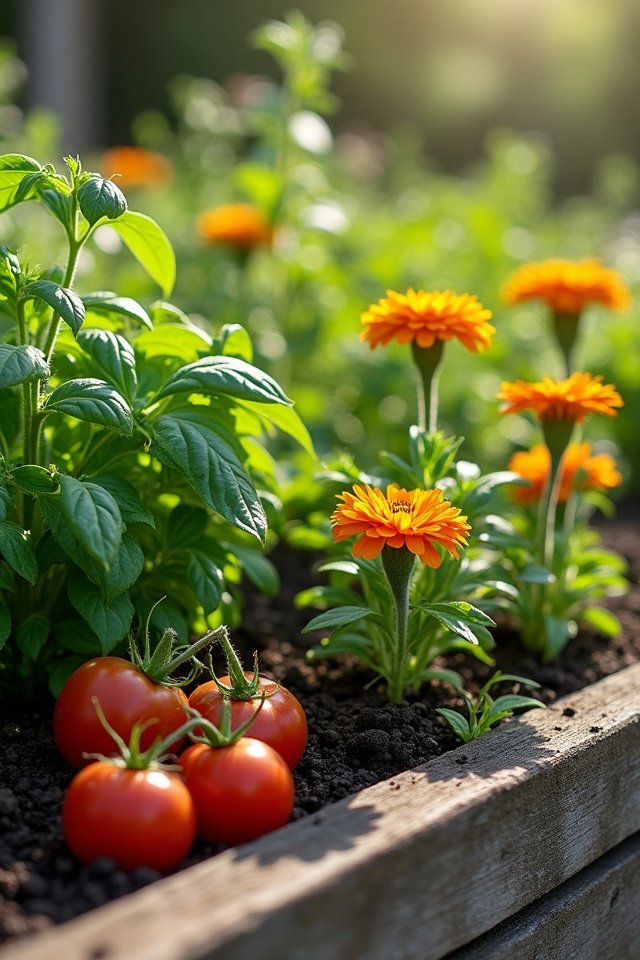
While you might think of planting as a solo adventure, companion planting is like inviting your plants to a garden party where everybody knows how to get along! By pairing certain companion plants together, you’ll create a harmonious ecosystem that thrives. For instance, try planting marigolds alongside tomatoes; those vibrant blooms help ward off pesky pests like nematodes! Basil, on the other hand, loves to mingle with peppers and tomatoes, enhancing their flavor while keeping unwanted insects at bay. Don’t forget to include aromatic herbs like cilantro, which not only beautify your garden but also support pesky pest control! So go ahead, mix and match—let your plants socialize for a bountiful, innovative harvest that keeps your garden lively and joyful!
Frequently Asked Questions
How Do I Protect My Raised Bed From Pests?
To protect your raised bed from pesky pests, you can adopt organic methods that keep your garden vibrant! Why not try planting marigolds or nasturtiums? They’re like nature’s bouncers! Use row covers to create a cozy barrier, or introduce beneficial insects like ladybugs—nature’s tiny bodyguards. Sprinkle diatomaceous earth around your plants; it’s like a secret defense shield! With these pest control strategies, your veggies will thrive, and those critters won’t stand a chance!
What Tools Do I Need for Small Raised Bed Gardening?
Imagine you’re ready to plant, but wait! You’ve gotta gather your essential gardening tools first. For small raised bed gardening, a trowel’s your trusty sidekick. It digs deep, just like that friend who always wants to know your secrets. Consider space-saving solutions, like vertical planters or compact watering cans. With just these tools, you can cultivate a lush garden right in your backyard! Why not give it a whirl? Happy gardening!
Can I Use Old Wood for Raised Beds Safely?
Absolutely, you can use old wood for raised beds, but be cautious! Avoid types treated with harmful chemicals, like creosote, as they can leach into your soil. Cedar and untreated pine are great choices, like cozy blankets for your plants! Always guarantee the wood’s clean and free of rot. Imagine planting in vibrant beds, knowing they’re safe! So, roll up your sleeves, and let that wood bring your garden to life! 🌿
How Often Should I Water My Raised Bed?
Did you know that plants in raised beds can require up to 50% less water? Just think about that! For ideal moisture retention, aim to water your raised bed deeply about once a week. If you’re using drip irrigation, you’re golden—this method delivers water right to the roots, keeping plants happy and hydrated. Check the soil’s moisture by sticking your finger in it; if it’s dry, time to give your veggies a revitalizing drink!
What Are Alternatives to Traditional Raised Bed Materials?
Looking for alternatives to traditional raised bed materials? You’re in luck! Try using recycled materials like wooden pallets or old tires—both make charming, eco-friendly containers. Imagine a colorful tire cradling vibrant flowers! Or, welcome creativity with alternative containers like large metal barrels or even wooden crates. They add character and unique flair to your garden! Why settle for boring when you can create a garden that’s a feast for the eyes? Enjoy!