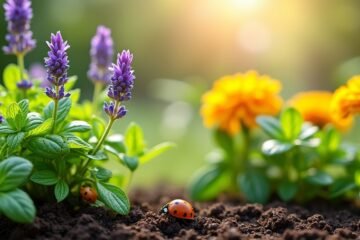
Looking to keep pests at bay while sprucing up your garden? Consider vibrant marigolds, the ultimate pest repellent! Their cheerful blooms not only ward off nematodes but also attract beneficial pollinators. Plant basil nearby, and you’ll invite a delicious aroma that chases away pesky flies. Don’t forget about the playful nasturtiums, which lure aphids away from your prized veggies! With garlic and chives joining the team, your garden will be a harmonious, vibrant paradise. Want more tips? Stick around!
Marigolds: Nature’s Pest Repellent
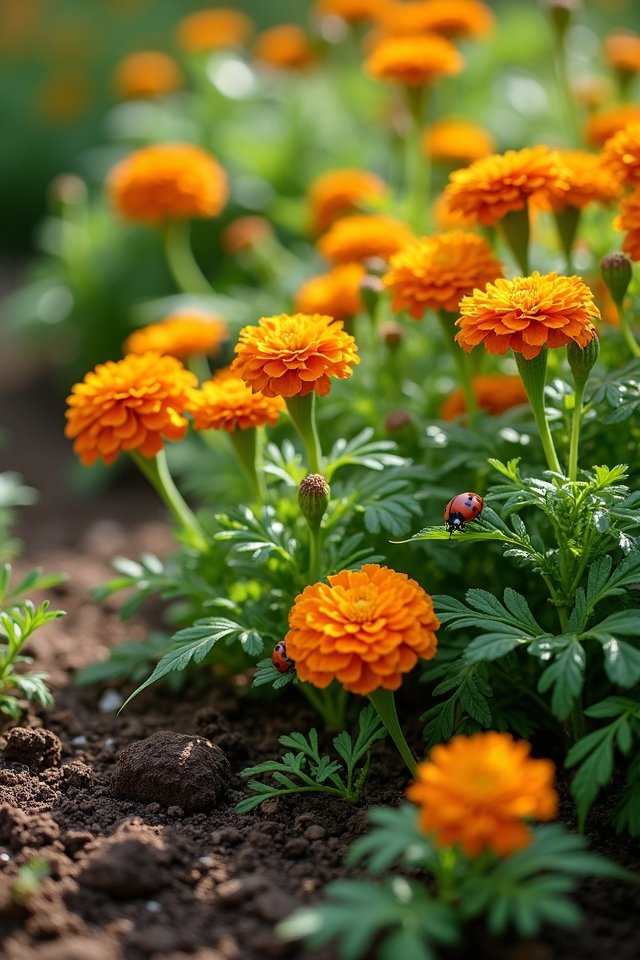
When you think of a vibrant garden, do you picture glorious marigolds dancing in the sunlight? These cheerful blooms, with their fiery yellows and oranges, are more than just a feast for the eyes. Various marigold varieties stand as champions in the fight against pesky pests. For instance, French marigolds emit a delightful scent that repels nematodes, while African marigolds create a protective barrier against aphids. Imagine strolling through your garden, knowing that these splendid flowers are secretly guarding your vegetables! Plus, the marigold benefits extend beyond pest control; they attract pollinators, making your garden come alive with buzzing bees. So, plant those marigolds and watch nature’s own pest repellent work wonders for your garden! Your plants will thank you!
Basil: A Flavorful Shield Against Bugs
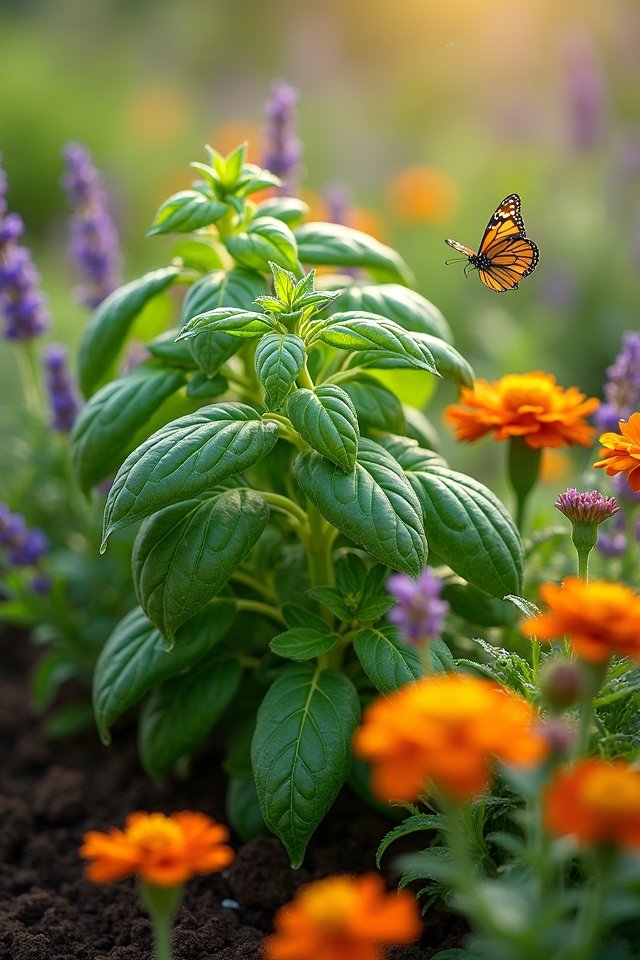
Imagine stepping into your garden, greeted by the delightful aroma of fresh basil—a scent so vibrant and inviting, it almost feels like you’re in an Italian kitchen! Not only is basil a culinary superstar, enhancing dishes with its zesty flavor, but it also packs remarkable basil benefits when it comes to pest control. Did you know it wards off pesky mosquitoes and flies? It’s true! By planting basil near tomatoes or peppers, you’re creating a natural shield against bugs—who knew protecting your plants could smell this delicious? Plus, you can snip a few leaves for a homemade pesto while fending off unwanted guests! So, why not let this herb do double duty in your garden? It’s a win-win!
Nasturtiums: Decoys for Aphids
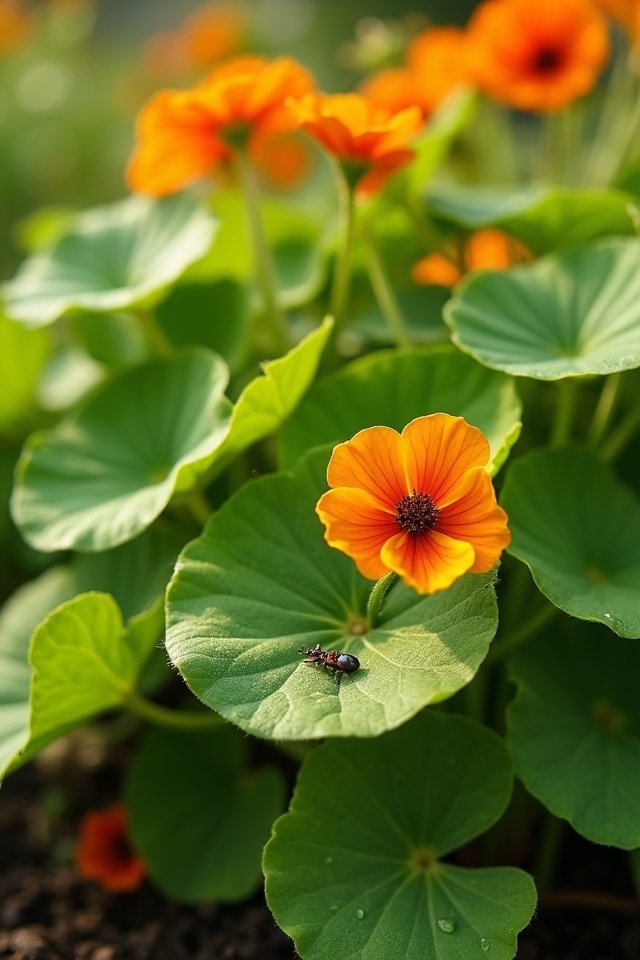
If basil’s delightful aroma and pest-fighting prowess don’t have you convinced, let’s turn our attention to nasturtiums, the unsung heroes of the garden! These bright, cheerful flowers aren’t just pretty faces; they provide fantastic nasturtium benefits by luring aphids away from your precious vegetables. Think of them as the garden’s flashy decoys, drawing those pesky bugs in like moths to a flame. When you plant nasturtiums nearby, aphids will be so captivated that they won’t bother your tomatoes or cucumbers. Plus, their edible leaves and flowers add a peppery zing to salads! So why not take advantage of their vibrant colors while giving those aphids something shiny to focus on? Welcome your garden’s true potential with these delightful companions!
Garlic: The Bulb That Deters Insects
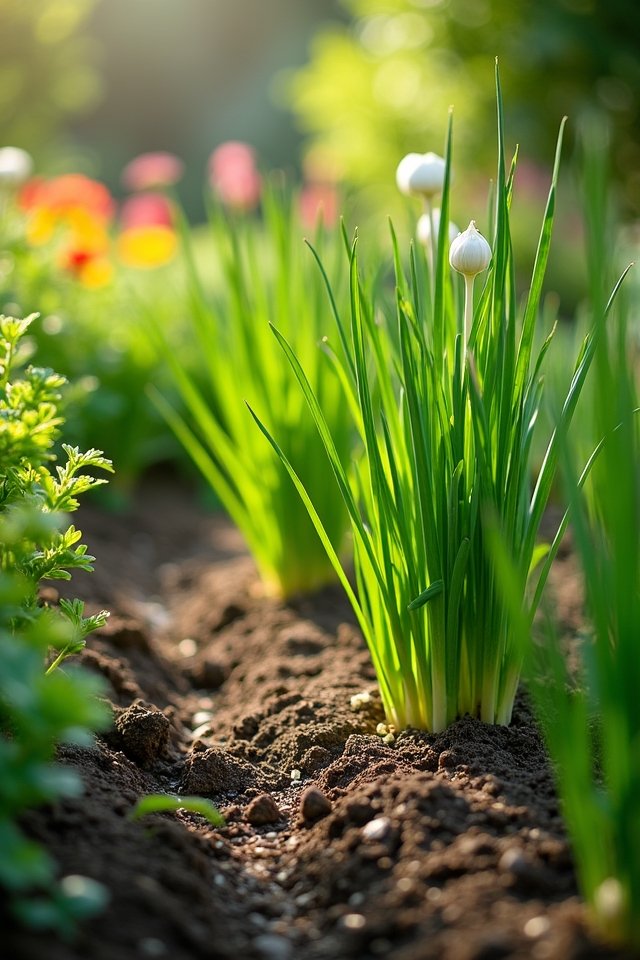
Nestled among your favorite garden vegetables, garlic packs a powerful punch! This aromatic bulb not only spices up your meals, but also brings fantastic garlic benefits for pest control. Imagine this: by simply planting garlic, you can deter pesky insects that threaten your produce!
For effective garlic preparation, consider making a natural spray. Blend garlic cloves with water, strain it, and spray it on plants to form a protective barrier. You’ll stop those unwanted intruders in their tracks! Trust me, they’ll hate the smell—so much that they won’t even think about munching on your tomatoes.
Chives: A Multi-Purpose Protectant
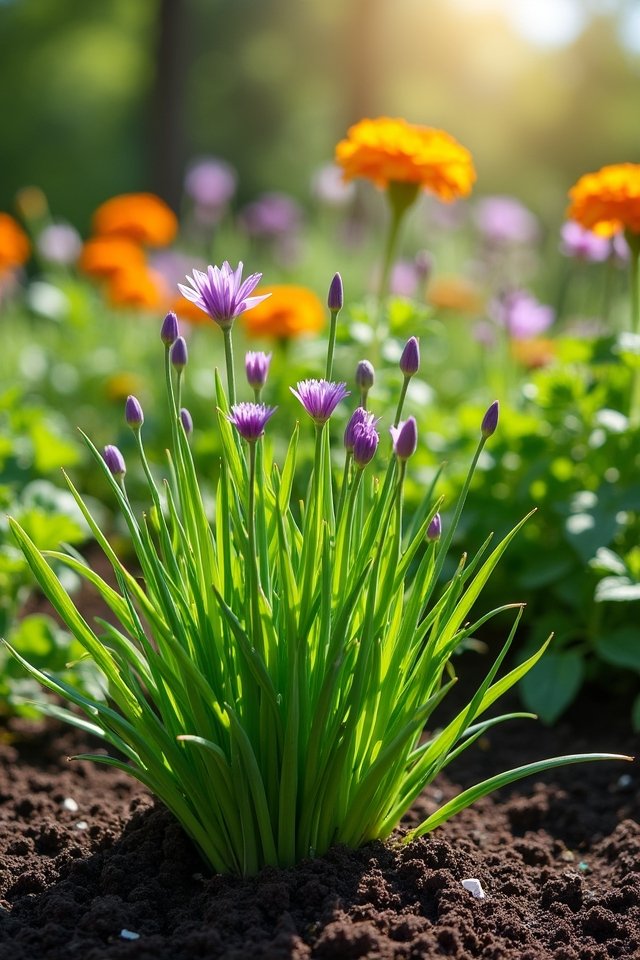
Chives are like the garden’s little superheroes—small in size but bursting with powers that keep pests at bay! You’ll love how these vibrant green wonders not only add flavor to your dishes but also offer amazing chives benefits for pest control. Planting chives near carrots can ward off those pesky carrot flies, while their scent deters aphids—talk about a dual threat! Plus, chives uses extend beyond protection; their striking purple flowers attract pollinators, making your garden even more lively. Imagine biting into a fresh salad, sprinkled with chives, while knowing they’re secretly fighting off unwanted critters! Want a healthier, more vibrant garden? Get those chives growing, and watch them work their magic! Your plants will thank you!
Borage: Attracting Beneficial Insects
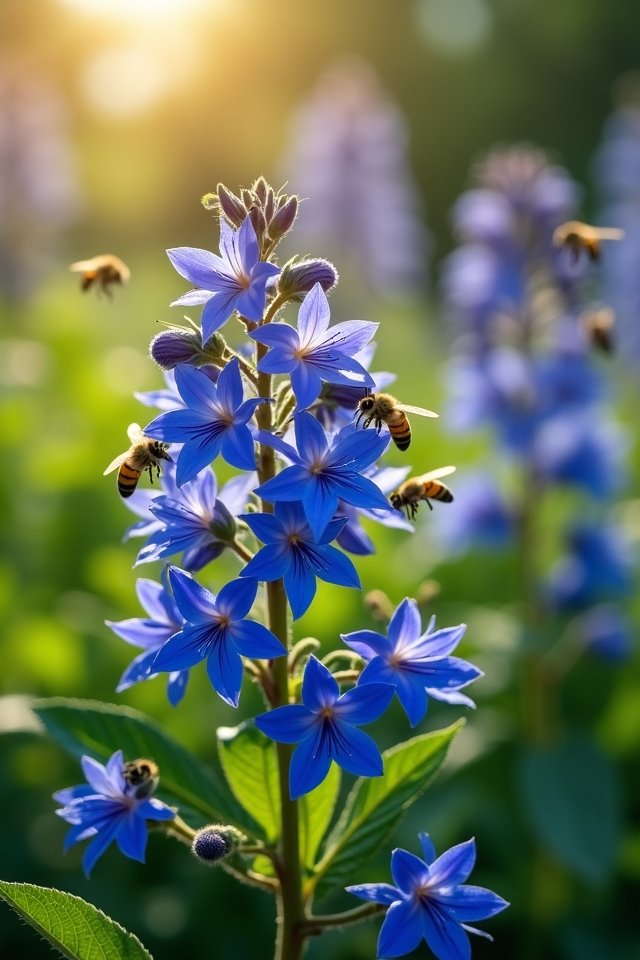
Have you ever wished you could summon tiny superheroes to your garden? Meet borage! This vibrant plant transforms your outdoor space into a haven for beneficial insects. With its starry blue flowers, borage boasts amazing borage benefits, including incredible pollinator attraction. Imagine bees buzzing around, while butterflies flutter gracefully, making your garden feel alive!
When planted next to tomatoes or squash, borage not only attracts these superheroes but also helps ward off pesky pests. It’s like having a natural pest control team on call, ready to protect your precious plants. Plus, you can even harvest its leaves for a revitalizing herbal tea—talk about multitasking! So, why not let borage work its magic and brighten up your garden?
Fenugreek: A Lesser-Known Defense
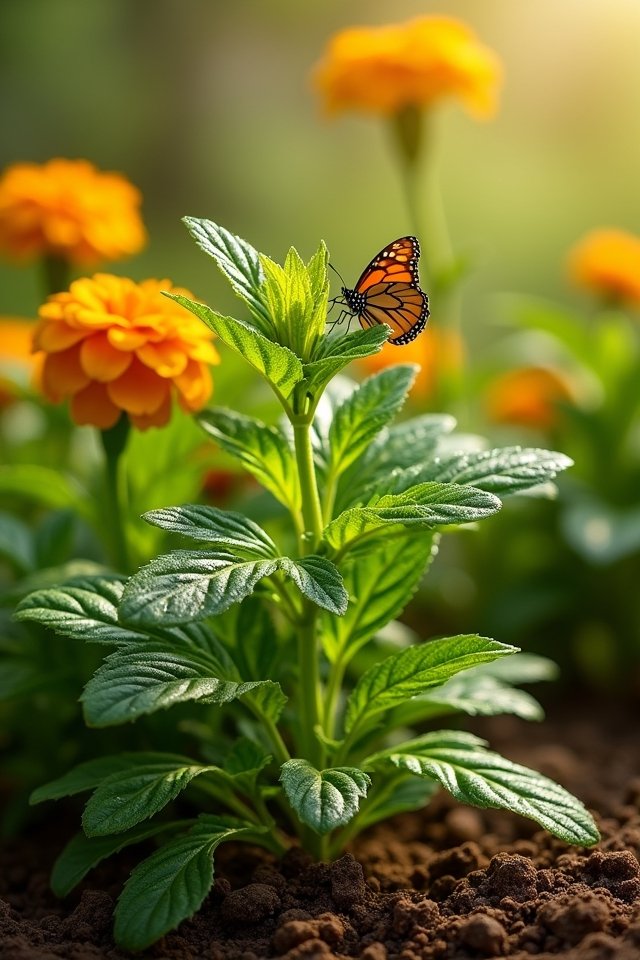
While you might not think of fenugreek as a garden superhero, this humble herb packs a powerful punch when it comes to pest control! Its unique aroma acts like a natural deterrent, sending pests packing while keeping your veggies safe and sound. Imagine planting fenugreek and watching aphids and spider mites bypass your garden like a bad date!
Fenugreek benefits don’t stop there—it improves soil health and attracts beneficial insects too. When it comes to fenugreek cultivation, it’s versatile and easy to grow, thriving even in poor soil. You’ll love watching those vibrant green leaves flourish as you sip your herbal tea! So, why not give fenugreek a shot? Your garden will thank you, and so will your taste buds!
Frequently Asked Questions
How Do Companion Plants Enhance Biodiversity in the Garden?
Companion plants are like the dynamic duo of your garden, boosting biodiversity benefits and creating ecosystem balance! When you plant marigolds with tomatoes, for instance, you’re inviting pollinators and beneficial insects to join the party. This lively mix not only keeps pests at bay but also fosters harmony in your garden’s environment! It’s colorful, fragrant, and a natural way to support your green oasis. Are you ready to let nature do its magic?
Can Companion Planting Improve Soil Health?
Companion planting can boost soil health in spectacular ways! When compatible plants thrive together, they help recycle soil nutrients naturally. For instance, deep-rooted legumes add nitrogen to the soil, while vibrant marigolds deter pests and support surrounding plants. It’s like having a teamwork party underground! Plus, those diverse root systems can improve structure and drainage. So, don’t you want your garden to sing with nutrient-rich harmony? Dig in and get planting!
What Are the Best Planting Companions for Tomatoes?
Imagine lush tomato plants standing proudly in your garden, surrounded by their trusty allies! Basil, with its fragrant leaves, isn’t just a delicious addition to pasta; it boosts your tomatoes’ flavor too. Marigolds add a splash of color while repelling pesky bugs, creating a vibrant fortress. And don’t forget garlic, the warrior against aphids! Pair these beneficial herbs with your tomatoes, and watch them thrive together like best friends at a summer picnic!
How Far Apart Should Companion Plants Be From Each Other?
So, how far apart should your companion plants be? It really depends on the type of plants you’re using! Generally, you’ll want about 12 to 18 inches apart. This spacing not only promotes healthy growth but also boosts pest deterrence. Imagine your plants as best buddies, giving each other space to shine! Too cramped, and they might get cranky, leading to sad leaves and pesky pests. Remember, happy plants mean a happier garden!
Do Companion Plants Require Special Care or Maintenance?
Companion plants are like best buddies in your garden, thriving together! While they don’t usually need special requirements, keep an eye on their maintenance tips. Water regularly, but don’t drown them! Trim away any dead leaves—think of it as giving them a stylish haircut. Some might need a bit of space, while others love a cozy crowd. Ever seen a flower share its sunshine? It’s all about balance and friendship!