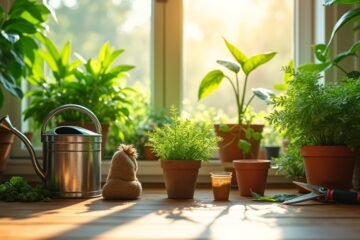
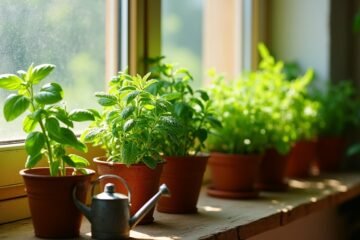
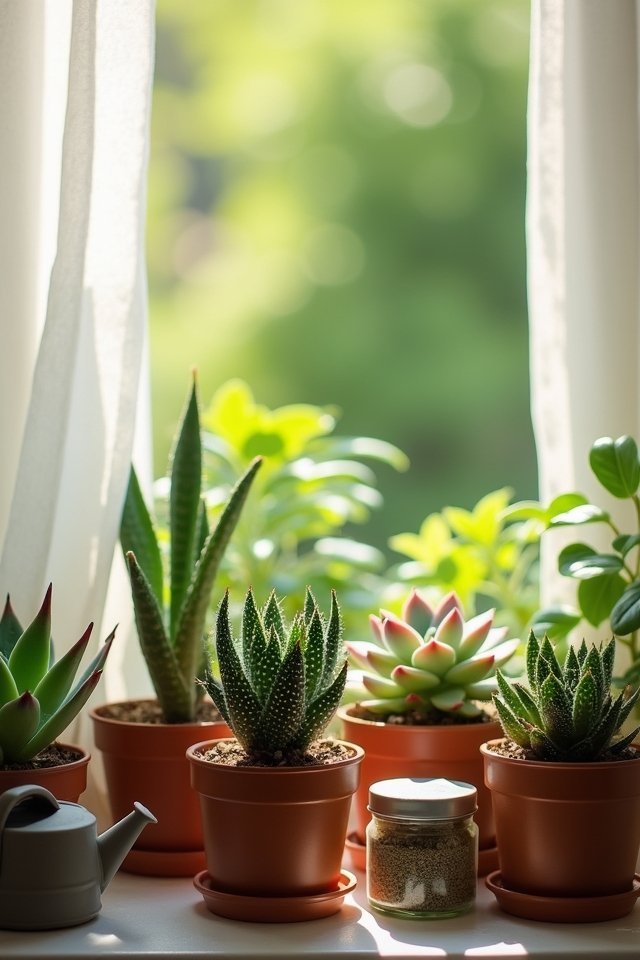
If you want to create a lively indoor garden in your small space, pick compact succulents like cute echeverias and charming haworthias! They thrive in at least six hours of sunlight, so a sunny south-facing window is perfect! Use a well-draining potting mix—think cactus blend mixed with sand. Water them every two weeks, but make sure you check that soil first! With the right care, your little green buddies will brighten up your space in no time! Keep going to reveal even more succulent secrets!
Choosing the Right Succulent Varieties for Small Spaces
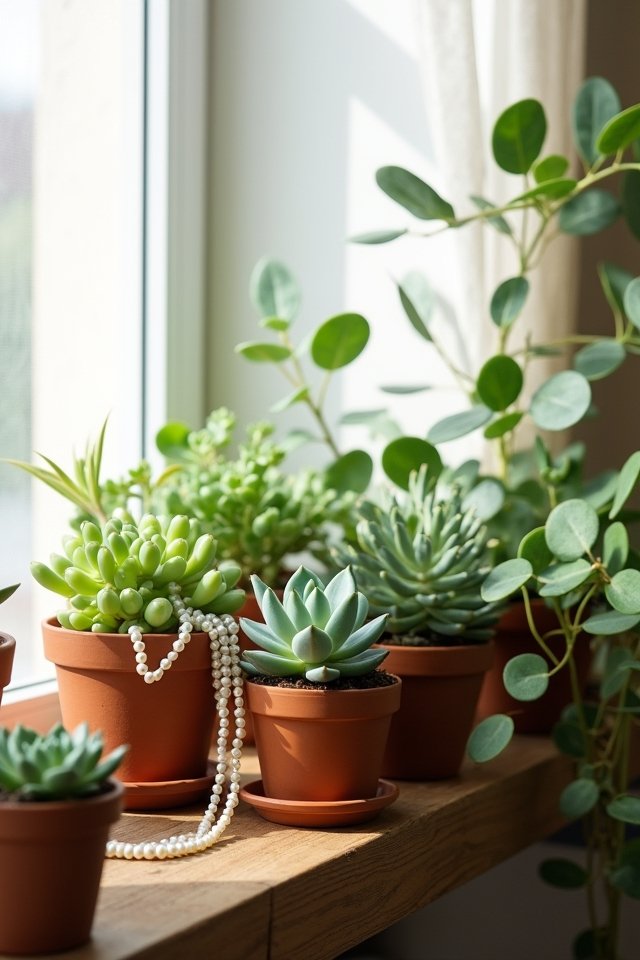
When you’re tight on space, how do you choose the perfect succulent? Look for compact succulent varieties that pack a punch in a small footprint! Think about darling little echeverias or adorable haworthias—they’re like the rockstars of low maintenance options! These beauties need minimal care, leaving you free to bask in their unique shapes and colors. Picture vibrant greens and blues that dance in the sunlight, brightening your space without overwhelming it! Also, don’t forget tiny pots—they’re like little treasure chests for your plant pals. So, go ahead—embrace those charming, space-savvy succulents! You’ll find that with a little creativity, even the tiniest space can bloom with life and vibrancy! Isn’t that just delightful?
Optimal Lighting Conditions for Indoor Succulents
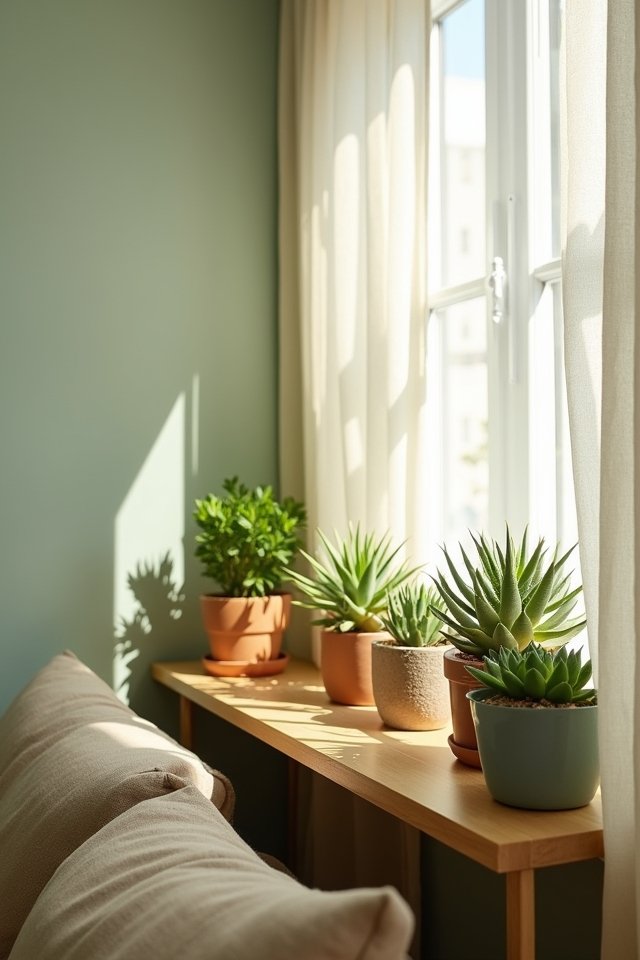
To give your indoor succulents the best chance to thrive, you’ve got to take into account their lighting needs—you wouldn’t want your little green friends to feel like they’re stuck in a dark cave! Aim for at least 6 hours of sunlight exposure daily. A south-facing window is like a five-star resort for your succulents, soaking up all that glorious light. If natural light’s scarce, don’t fret! You can use artificial lighting, like LED grow lights, to simulate a sunny environment. Just position them about 12 inches above your plants for ideal effect. Remember, too much direct light can scorch those delicate leaves. Keep an eye on your succulents’ growth—they’ll tell you if they’re happy or asking for a brighter spot!
Ideal Soil and Potting Techniques
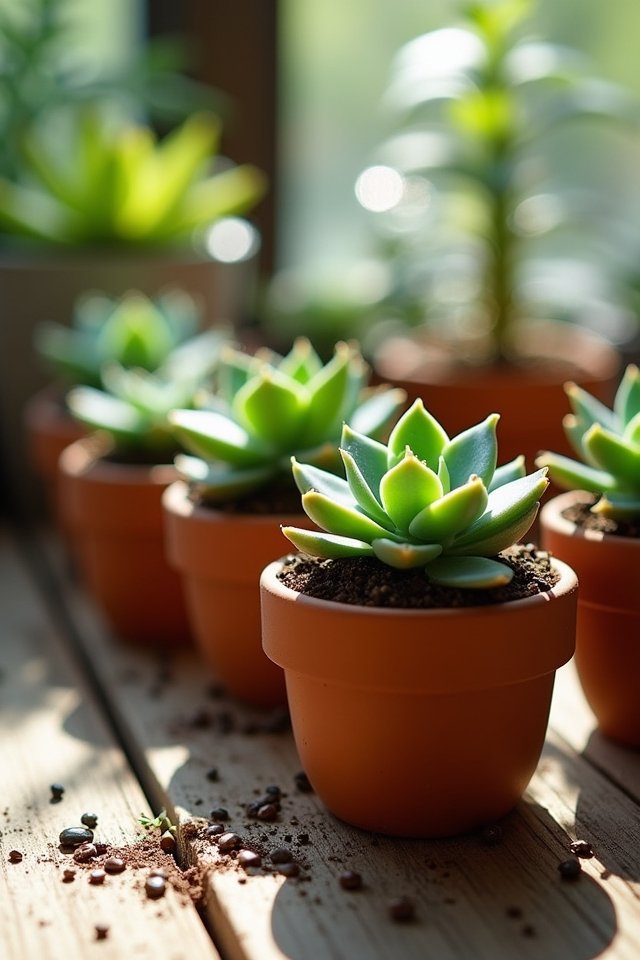
While it might seem tempting to grab any old potting mix, using the right soil is essential for your succulents’ happiness and health! Think of your plants sitting on a comfy couch in a cozy lounge—it needs the right support! For excellent soil drainage, mix potting materials like cactus mix with coarse sand or perlite. These additions create a playful, airy blend that lets water flow freely, preventing root rot! Consider using terracotta pots, too; their porous nature helps keep the roots breathable. Give your plants a solid foundation, and they’ll reward you with vibrant colors and delightful growth. Isn’t it fantastic how a few tweaks can make such a difference in your tiny indoor oasis? Let’s pot those beauties right!
Watering Techniques to Prevent Overwatering
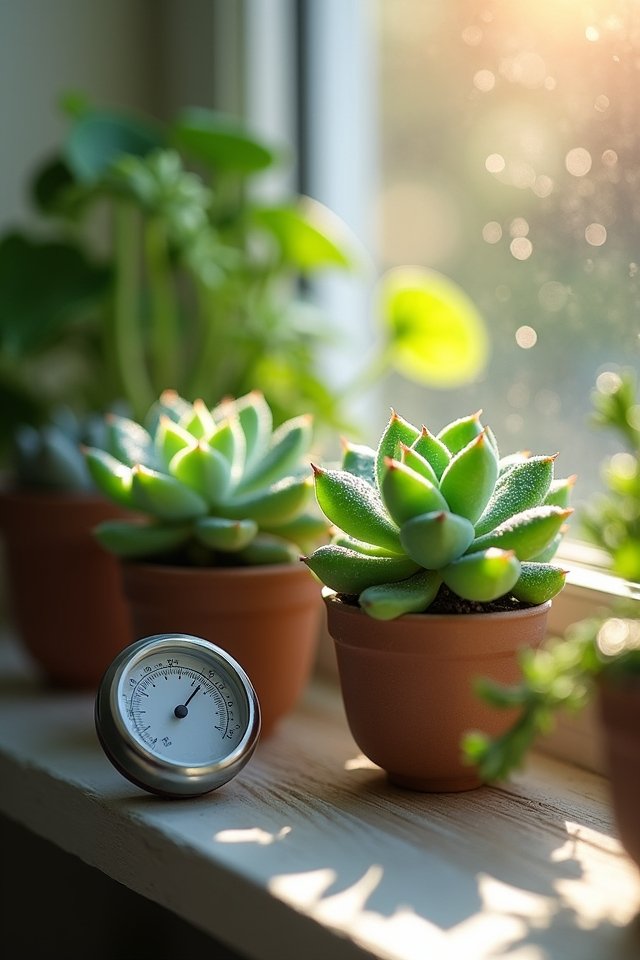
Finding that perfect potting mix is just the beginning of keeping your succulents happy; watering them properly is the next big step! You want to avoid those sad, droopy leaves, right? Keep an eye on your watering frequency. A good rule is to water every two weeks, but always check your moisture levels first. Stick your finger in the soil; if it’s dry an inch down, it’s time to hydrate your little green friends! To prevent overwatering, consider excellent drainage solutions like pots with holes or adding perlite to your mix. Think of it as giving your plants a cozy, breathable home! So, let’s keep those succulents thriving, not drowning! Your plants will thank you with vibrant colors and joyful growth!
Maintaining Appropriate Humidity Levels
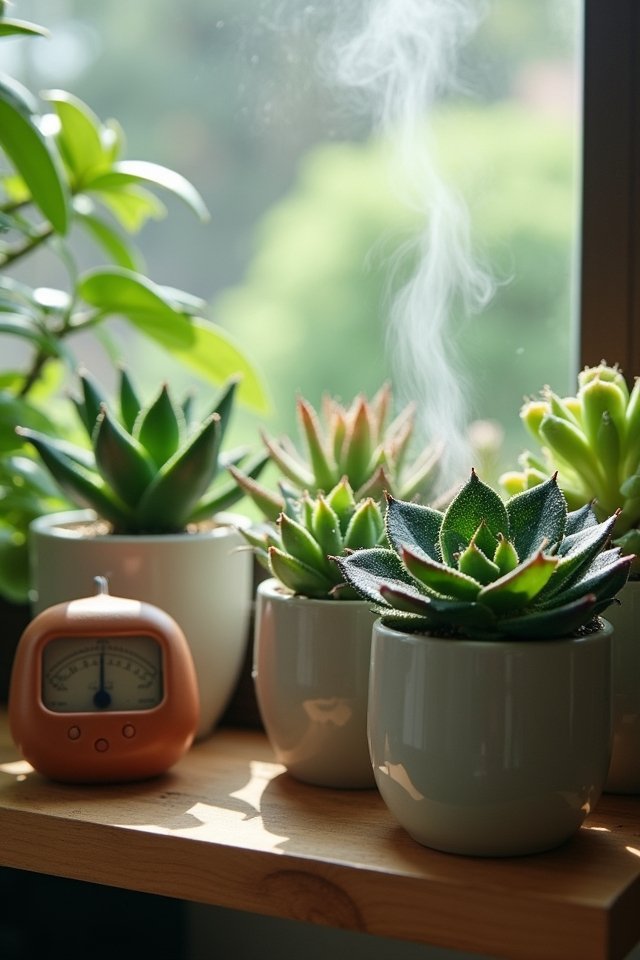
Even though succulents thrive in dry environments, they still appreciate a little humidity now and then! To ignite their growth, aim for humidity control between 30-50%. Adding a small humidifier or placing a shallow dish of water near your plants can create a gentle mist, like Mother Nature’s hug! Don’t forget about air circulation; it’s key. You can achieve this by opening a window or employing a small fan to keep the air fresh.
Too much humidity can lead to root rot, so watch for droopy leaves! By balancing humidity levels and airflow, you’re giving your succulents a cozy home that promotes their vibrant beauty. Who knew pampering plants could feel so rewarding? Happy growing!
Fertilizing Essentials for Thriving Succulents
After you’ve perfected the humidity levels in your succulent oasis, it’s time to sprinkle a little magic onto your green companions through fertilizing! Think of fertilizer as a delicious feast for your plants. You’ve got options, like balanced liquid fertilizers or slow-release granules. These fertilizer types will give your succulents a boost, making them flourish like never before!
For best results, apply fertilizer once every month during the growing season—which is just fancy talk for spring and summer. Imagine your succulents enthusiastically sipping up nutrients while you happily watch them thrive! So, grab that bottle, and let your plants enjoy the culinary delight of nutrient-rich goodness. Trust me, they’ll thank you with vibrant colors and joyful growth!
Frequently Asked Questions
Can Succulents Thrive in Low-Light Conditions?
Can succulents thrive in low-light conditions? Well, it depends! While most succulent varieties prefer bright indoor lighting, there are some resilient little champions, like the snake plant or jade plant, that can handle lower light. Just picture your plant soaking up whatever light it finds, like a clever little sunbather! So, if you’ve got a cozy nook with minimal sun, don’t fret — these green buddies can still brighten your space beautifully!
How Often Should I Repot My Succulents?
You should repot your succulents every 1-2 years, depending on their growth. Good soil selection is essential—think of it as picking the perfect outfit! If roots start popping out of the pot like popcorn, it’s time for a new home! Don’t wait too long; they’ll get cramped and grumpy! Mix some cactus soil with perlite for that ideal drainage. Remember, happy plants equal a happy you! Isn’t that just delightful?
Are There Pet-Safe Succulent Varieties?
Are there really pet-safe succulent varieties out there? Absolutely! You’ve got your charming Haworthia and delightful Echeveria, both safe for your furry friends. These non-toxic plants won’t cause a fur-raising panic if your cat decides to nibble! However, always watch for signs of interest. Succulents bring a spark of joy, but knowing they won’t harm your pets is a must. So, go ahead and create a colorful oasis without worry!
What Common Pests Affect Indoor Succulents?
Indoor succulents can attract pesky little critters like mealybugs, aphids, and spider mites! Spotting these annoying pests is all about pest identification. Look for tiny webs or fuzzy patches—they’re sneakier than ninjas! For pest prevention, keep your plants clean and avoid overwatering. Regularly inspect your greenery; a couple of minutes could save your beloved succulent from a doom-filled fate. Trust me, a healthy plant is worth celebrating!
How Can I Propagate My Succulents at Home?
Did you know that some succulents can grow new plants from just a single leaf cutting? How awesome is that? To propagate at home, grab a healthy leaf, let it dry for a day or two—this helps prevent rot. Then, either place it directly in soil or set it in water propagation, where roots will sprout like magic! Keep it bright and steady, and soon you’ll have adorable new friends thriving away!