If you want to keep your raised beds thriving, you’ve got to be sharp about pests! Use a magnifying glass to catch those sneaky aphids or slugs early. Try planting basil alongside your tomatoes—it’s like giving pests the boot! Row covers and sticky traps work wonders too, creating a fortress around your plants. And don’t forget organic remedies like a garlic spray; it’s simple yet effective! Curious to discover more nifty tricks? There’s plenty more to explore!
Understanding Common Pests in Raised Beds

When you step into your garden, it’s like entering a vibrant world of color and life, but pesky pests can quickly dampen your enthusiasm! To keep your raised beds thriving, focus on effective pest identification strategies. Spotting the culprits, like aphids snuggling on your tomato plants or sneaky slugs sliding through your greens, is essential. Use a magnifying glass to investigate your plants closely—think of yourself as a detective in a pest crime scene! Understanding the pest lifecycle is equally important; knowing when they emerge can save your crops from a feast of devastation. By recognizing these critters early, you’ll develop innovative solutions tailored to your garden’s unique challenges. Don’t let uninvited guests ruin your gardening adventure!
Cultural Control Strategies

Now that you’ve got a handle on spotting those pesky little garden invaders, it’s time to outsmart them with some clever cultural control strategies! Think of your garden as a dynamic ecosystem. By using crop rotation, you can break the cycle of pests. Move your tomatoes to a different spot each year; it’s like sending unwanted guests packing! Companion planting is another innovative tactic. Imagine growing basil next to your tomatoes—those aromatic leaves not only add flavor but also deter pesky aphids! Plus, vibrant marigolds can confuse and repel harmful bugs. With a little creativity, you’ll create a thriving garden that’s uninviting to pests. Let nature be your partner in this exciting journey of pest management!
Physical Barriers and Traps

While you might think pests are the only ones with clever tricks up their sleeves, you can outsmart them with some nifty physical barriers and traps! Imagine covering your precious plants with row covers, like cozy blankets that protect them from pesky intruders. These translucent shields let sunlight in while keeping critters out—pretty ingenious, right? And don’t forget sticky traps! These adhesive wonders act as little pest hotels, capturing unwelcome guests before they can munch on your veggies. Just place them strategically around your beds, and watch as they do their magic! By using these innovative methods, you create a fortress for your plants, turning the tables on those troublemakers. So gear up, and let’s keep your garden thriving!
Organic Pesticides and Natural Solutions

After setting up those clever traps and barriers, you might wonder what else can keep your garden flourishing. Try embracing organic solutions and whip up some homemade remedies! For example, mix equal parts water and vinegar to create a potent aphid repellent—talk about a one-two punch!
You can also sprinkle diatomaceous earth around your plants; it’s like putting on tiny armor for your veggies. Need a gentle insecticide? Blend garlic and water for a fragrant mist that bugs despise!
Integrated Pest Management Techniques
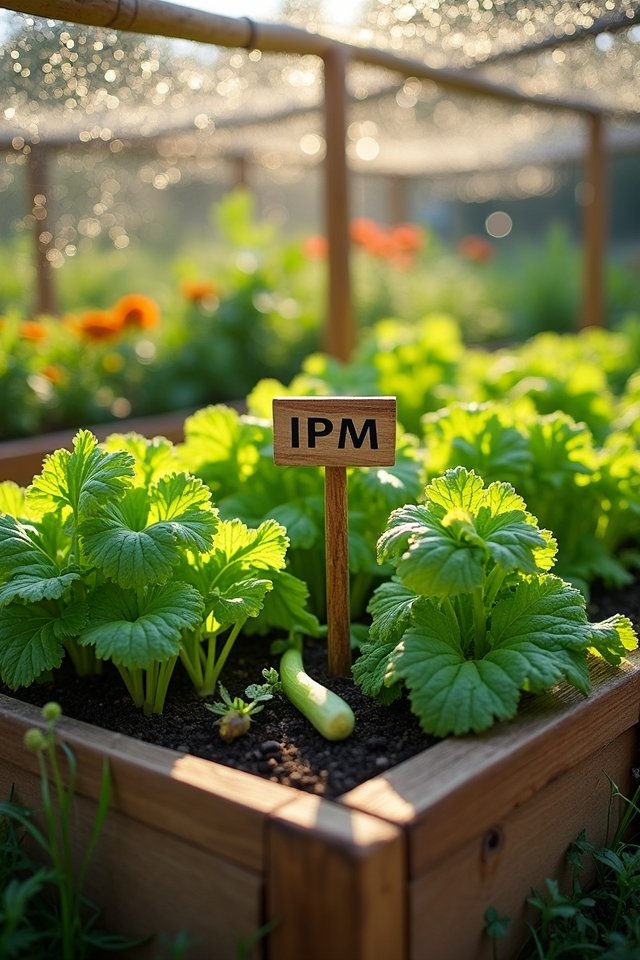
When you’re trying to protect your raised bed garden, integrating pest management techniques will be your trusty sidekick! Think of it as your garden’s superhero squad. First up, biological control—introducing beneficial insects like ladybugs to munch on pesky aphids. It’s nature’s way of keeping the balance! Don’t forget about companion planting; pairing tomatoes and basil creates a winning combo that repels harmful critters while boosting growth. It’s like inviting your garden’s best friends over for a protection party! Additionally, monitor your plants regularly, so you catch issues early. Why wait for a pest invasion? Adopt these innovative tactics, and your raised bed will thrive, flourishing like a dazzling jewel in the sunlight! Ready to suit up your garden? Let’s get started!
Frequently Asked Questions
How Can I Prevent Pests From Entering My Raised Beds?
You wouldn’t believe the sneakiness of pests! To prevent them from invading your raised beds, try using organic barriers like floating row covers. They’re like protective blankets for your veggies! Employing physical deterrents, such as copper tape around the perimeter, can keep those pesky snails at bay. You’ll be amazed how these simple tactics transform your garden into a fortress. Isn’t it thrilling to nurture your plants without unwelcome guests? Happy gardening!
What Plants Naturally Repel Common Pests in Raised Beds?
You’ll love using herb choices like basil, mint, and rosemary as natural pest deterrents in your raised beds! These fragrant plants not only make your garden smell divine, but they also send pesky insects packing. Plant basil next to tomatoes for a delicious buddy system that confuses unwanted critters. Mint’s strong aroma can shield your veggies, too. Who knew your garden could be a fortress? Gardening’s a tasty adventure you won’t want to miss!
Are There Specific Seasons When Pests Are More Active?
You’ve probably noticed it—pests seem to throw a party during certain seasons! Spring and summer bring a surge of pest activity, as bugs awaken from their winter slumber. You might spot aphids clinging like stubborn stickers, while beetles come out to munch. Fall? It’s all about the last-minute buffet before the cold sets in! Understanding these seasonal trends means you can prepare and strategize, turning your garden into a pest-proof paradise! Exciting, right?
How Often Should I Check My Raised Beds for Pests?
You should check your raised beds at least once a week for pesky intruders! Regular pest monitoring helps you catch those sneaky critters before they wreak havoc. Think of it as a treasure hunt—looking for signs of trouble like weird holes or tiny trails. Don’t forget to practice some pest identification, so you know exactly what you’re dealing with! A quick stroll can save your veggies from becoming a buffet—so grab your magnifying glass and get to hunting!
Can Companion Planting Help Reduce Pest Issues in Raised Beds?
Imagine your garden’s a team of superheroes! Companion plants act as pest deterrents, standing guard just like trusty sidekicks. For instance, marigolds can confuse pesky aphids, creating a protective barrier around your tomatoes. Picture your veggies thriving, while their companions do the heavy lifting against invaders! You’ll love the vibrant colors and intrigue they bring. Why not give it a try? You might just find pest control can be fun and innovative!