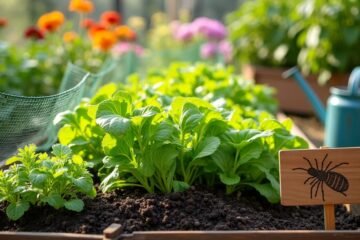
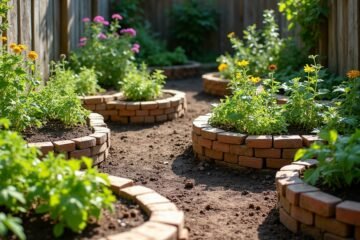
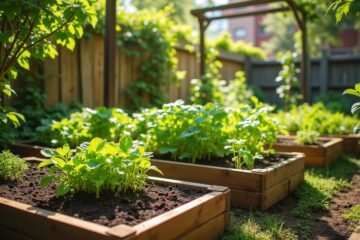
Watering small garden beds can be a breeze! Try drip irrigation systems for a gentle rain effect that delivers water right to your plants’ roots. Soaker hoses also provide deep hydration—like a warm hug for your greens! For a personal touch, hand watering lets you connect with your plants early in the morning. Plus, mulching helps retain moisture while keeping pesky weeds at bay. Curious about how to monitor soil moisture levels? There’s more to explore!
Drip Irrigation Systems
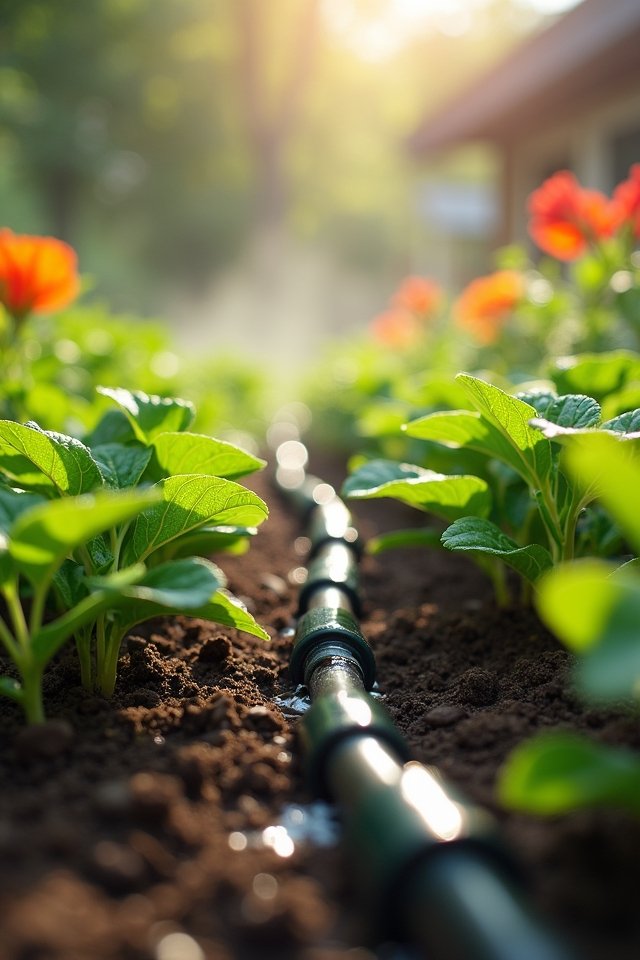
Have you ever seen a thirsty plant beg for water? It’s a sight that tugs at your heart! That’s where drip irrigation systems come into play. With efficient drip line installation, you can deliver water directly to the plant roots, like a gentle rain falling on parched soil. Imagine the drip irrigation benefits: less water waste, healthier plants, and all while saving you time! It’s like having an attentive gardener who knows exactly when to water, without fuss. You won’t need to feel guilty about cramming your flower beds or veggies into tight spots; every plant thrives! Plus, it keeps pesky weeds at bay. Adopt innovation and give your plants the gift of drip irrigation—your flowers will thank you!
Soaker Hoses
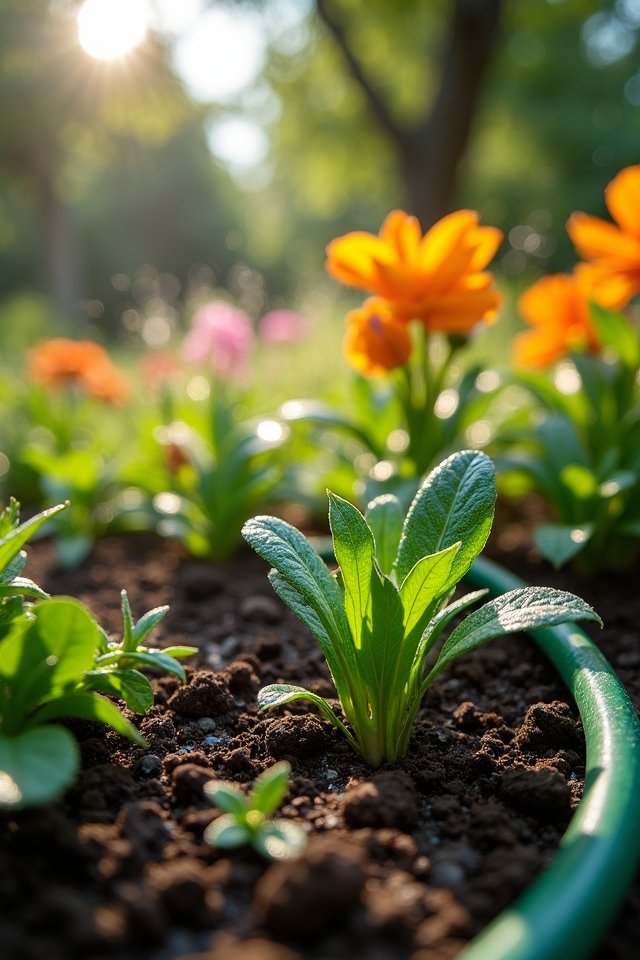
Soaker hoses can transform your watering routine in a flash, almost like magic! Picture a gentle rain falling directly at the roots of your favorite plants. That’s the beauty of soaker hoses. The soaker hose benefits are incredible; they deliver moisture deeply, saving you time and conserving water! Installation is a breeze—just lay the hoses along your beds, connecting them to a water source, and voilà! You’re set. With a little love, they’ll keep your plants thriving, even on the hottest days. Think of it as hugs for your plants—so warm and nourishing! So why aren’t you using a soaker hose yet? Say goodbye to drought-stressed plants and hello to lush growth. Your garden will thank you!
Hand Watering Techniques
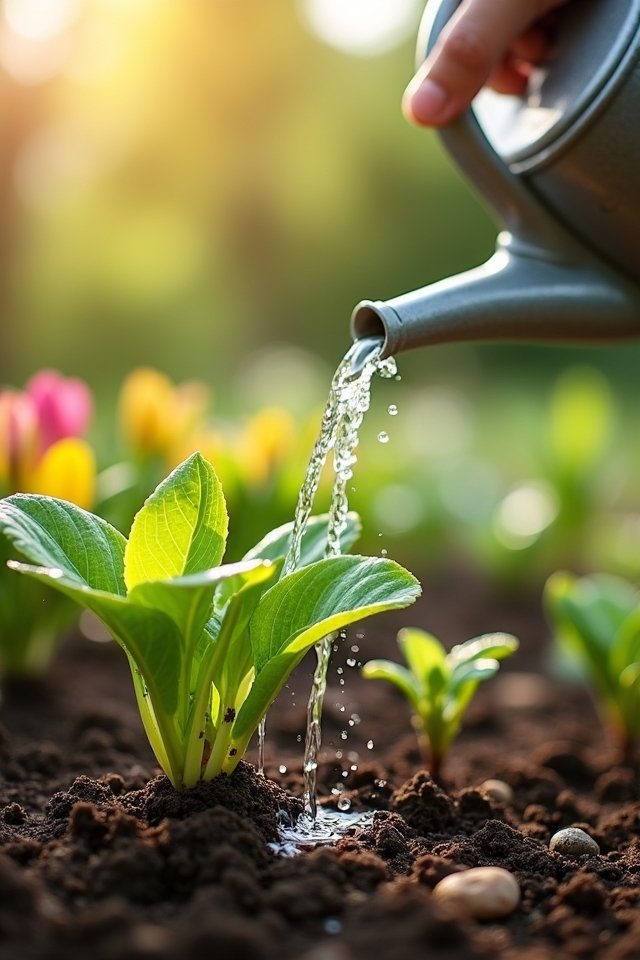
Hand watering can feel like a personal conversation with your plants, a chance to connect and nurture them directly! Think of it as a cozy chat over tea—your plants crave that attention. Don’t forget, water conservation is key! Water in the early morning when the sun’s not blazing—this gives your plants a revitalizing drink without wasting precious water. Aim for a slow, steady sprinkle so that water seeps deep into the soil, much like a gentle rain shower! Use a watering can or a hose with a nozzle to aim precisely, avoiding those random dance parties on your patio. And remember, your plants can’t tell time, but they’ll thrive with your thoughtful care at the right moments!
Watering With a Timer
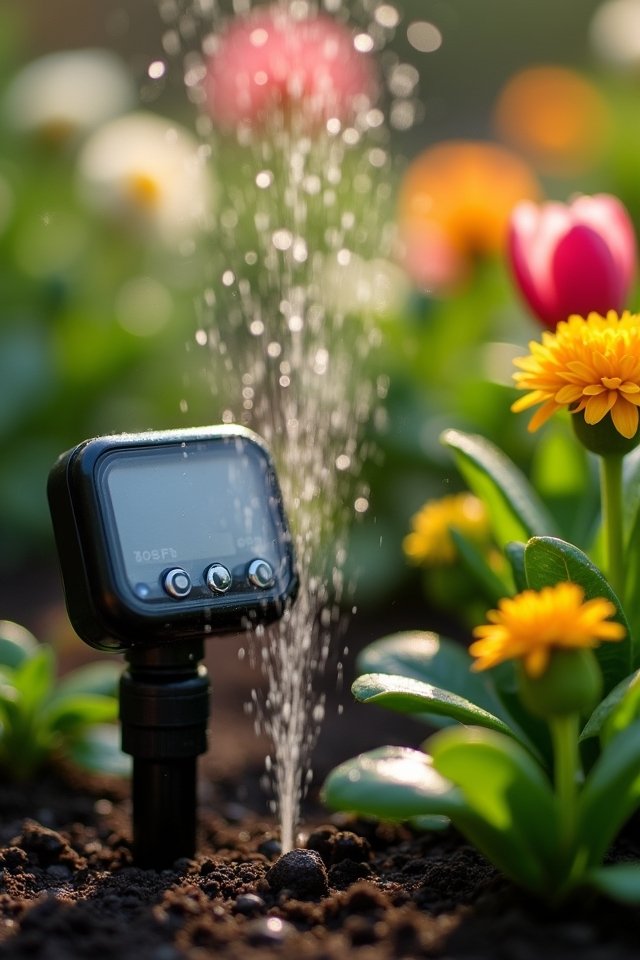
Using a timer to water your small beds can be a game changer! Imagine effortlessly controlling your garden’s hydration with just a few clicks! With precise timer settings, you can guarantee your plants receive just the right amount of water, as if they’re enjoying a revitalizing spa day. It’s all about making schedule adjustments that fit your busy life, so you don’t need to worry about forgetting to water. Set it and forget it—like a magical garden assistant! Think of the freed-up time for your favorite hobbies! You’ll wonder how you ever lived without it. So, grab a reliable timer, program it to your plant’s liking, and watch your garden flourish while you kick back and relax!
Mulching to Retain Moisture
Who doesn’t love a garden that stays lush and vibrant, even on the hottest days? Mulching is your secret weapon for moisture retention! It creates a cozy blanket for your plants, reducing evaporation and suppressing pesky weeds.
Here are some mulch types to evaluate:
- Wood Chips: They break down slowly, offering long-term benefits.
- Straw: Lightweight and perfect for keeping moisture in without weighing your plants down.
- Grass Clippings: A freebie that adds nutrients while forming a protective layer.
- Shredded Leaves: Nature’s way of recycling, this helps retain moisture and enrich the soil.
- Cocoa Hulls: Sweet-smelling and stylish, they add charm while keeping your garden hydrated.
Monitoring Soil Moisture Levels
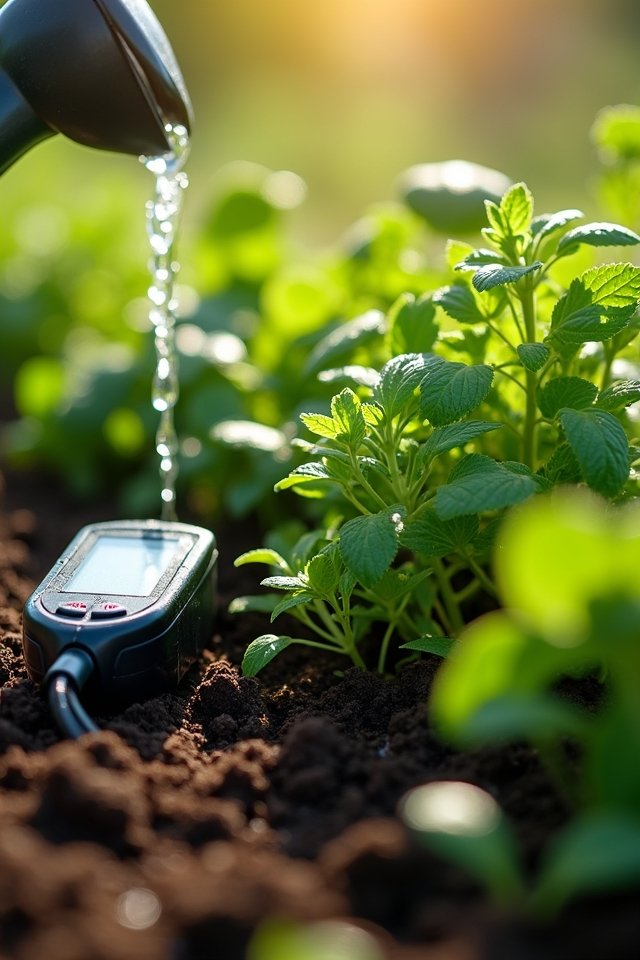
Keeping your plants happy isn’t just about pouring water on them willy-nilly; it’s about knowing when they truly need a drink! That’s where soil moisture monitoring comes into play. You wouldn’t want to swim in a puddle, right? So, don’t drown your plants either! Invest in moisture sensors. These nifty gadgets provide real-time readings, helping you avoid overwatering and underwatering disasters. Imagine checking your plant’s “hydration level” like a game—it’s that exciting! With a simple glance at your sensor, you’ll know if that flowerbed needs a quick splash or can wait a bit longer. So, immerse yourself in this innovative approach and let your plants thrive while you save water and time. It’s a win-win!
Frequently Asked Questions
How Often Should I Water Small Beds in Different Seasons?
You’ve got a garden to nurture, so let’s figure out the watering frequency! In spring and fall, aim for every 3-4 days, giving those enthusiastic plants time to soak up moisture. Summer? Well, it’s a different ball game—every 2 days, or even daily if it’s blistering hot! In winter, just a sprinkle once a week keeps those roots cozy. Think of your plants like thirsty friends; they’ll thrive with the right seasonal adjustments!
What Time of Day Is Best for Watering Small Beds?
You’ve gotta pick the right time to water those small beds for maximum impact! Morning watering is like an invigorating wake-up call for your plants, helping them soak in nutrients before the sun blazes. On the flip side, evening watering cools them down after a hot day, preventing evaporation. Just think of it as tucking them in for the night! So, when are you going to give your green friends the love they crave? 🌱✨
Can I Use Rainwater for Watering Small Beds?
Absolutely, you can use rainwater for watering your small beds! Collecting rainwater is like capturing nature’s gift, brimming with nutrients your plants adore. Picture those juicy tomatoes and vibrant flowers thriving! Rainwater benefits your garden because it’s free of chemicals found in tap water. Just don’t forget to set up a rain barrel or a stylish collection system—you’ll be saving money and the planet, rain or shine! Isn’t that a win-win?
What Types of Plants Require More Frequent Watering?
You’re wondering which plants need more water? Think moisture-loving plants like ferns and hydrangeas—they thrive on the wet stuff! On the other hand, drought resistant plants, such as succulents and lavender, laugh in the face of dry spells. Imagine having a garden that dances with colors, fragrance, and life! So, if you’re choosing, consider the thirsty beauties—after all, they’ll hydrate your landscape with vibrant splendor! Isn’t that worth embracing?
How Do I Prevent Overwatering in My Small Beds?
You know, overwatering’s a sneaky little devil! To keep your small beds thriving, focus on clever drainage solutions, like raised beds or perforated containers. Plus, moisture sensors are game-changers! They’ll tell you when your plants are thirsty, saving them from drowning. Remember, soil should feel like a damp sponge, not a soggy mess! So, keep it light and let your plants breathe! Who knew hydration could be such an adventure? Enjoy every drop!