Companion planting is like having your garden’s own superhero team against pesky bugs! By pairing plants like tomatoes and basil, you not only enhance flavor but also send pests packing! Marigolds, with their bright blooms, act like tiny pest alarms, while garlic’s robust scent keeps critters at bay. Plus, this method boosts soil health, giving your plants the strength they need to thrive! Curious about more fantastic combos and tips to shield your garden? Keep exploring!
Understanding Companion Planting
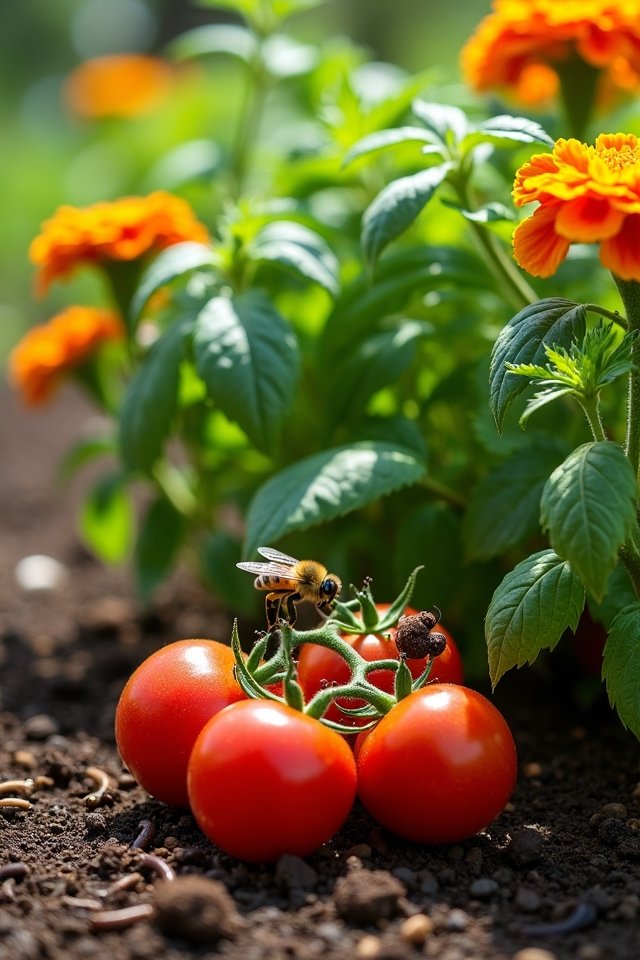
Companion planting isn’t just a gardening trend; it’s like having a trusty sidekick for your plants! By understanding plant relationships, you can create a powerhouse garden that thrives on collaboration. Imagine your tomatoes and basil forming a dynamic duo—one provides shade while the other enhances flavor. Plus, when you mix compatible plants, you boost your soil health. Diverse root systems help aerate the soil and prevent erosion, while different plants can share nutrients. You won’t just grow food; you’ll cultivate a vibrant ecosystem! So, why not give it a try? Pairing crops like carrots and onions isn’t just smart—it’s garden innovation! Discover these relationships, and watch your plants flourish in ways you never imagined!
Benefits of Companion Planting for Pest Control
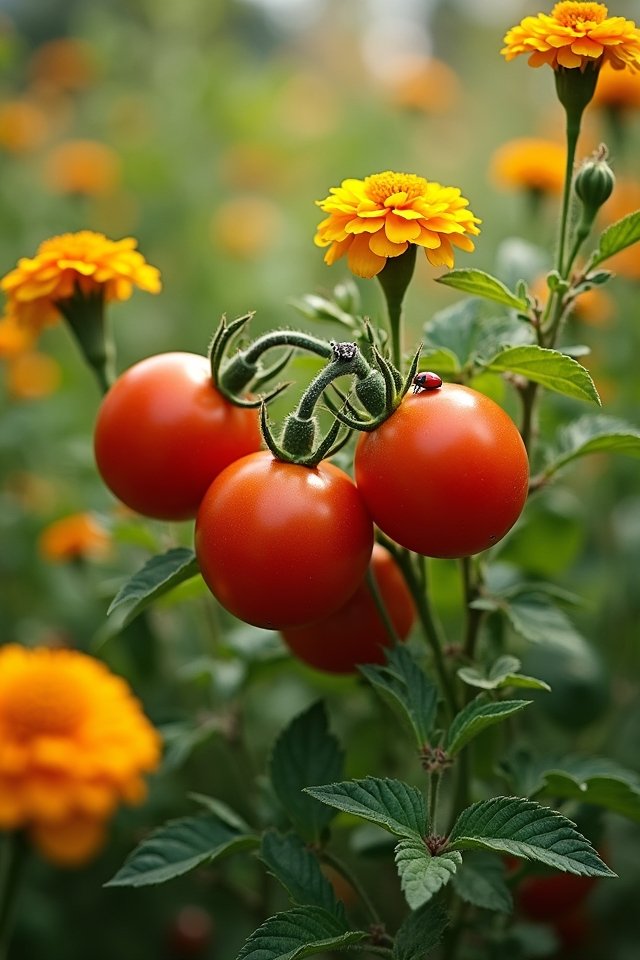
While you might think of pest control as just another chore, using plant partnerships can make it feel more like teamwork! Companion planting offers amazing benefits for pest control and simplifies your gardening journey. Here are three key advantages you’ll love:
- Natural Pesticides: Certain plants naturally repel pests. Think of marigolds; their vibrant blooms don’t just look pretty but also keep unwanted bugs away!
- Crop Rotation: By mixing your plants, you’ll confuse pests and prevent them from establishing a permanent residence in your garden.
- Healthy Soil: Partners can improve soil quality, making your plants grow stronger and tougher against pests.
Examples of Effective Companion Planting Combinations

Finding the perfect plant pals for your garden can feel like a delightful matchmaking game! Take the iconic duo of tomato and basil. Together, they create a symphony of flavor while combating pests—what a delicious partnership! Envision biting into a fresh, juicy tomato that’s been nurtured by its aromatic basil buddy. Then, there’s the charming carrot and onion combination. Visualize this: the carrots thrive beneath the surface, while onions send their pungent scent upward, keeping greedy pests at bay. It’s a win-win! By planting these dynamic pairs, you’re not just growing food; you’re crafting an ecosystem! So, why not shake things up in your garden? Give these combinations a try, and watch your plants flourish like never before!
How Companion Plants Deter Pests
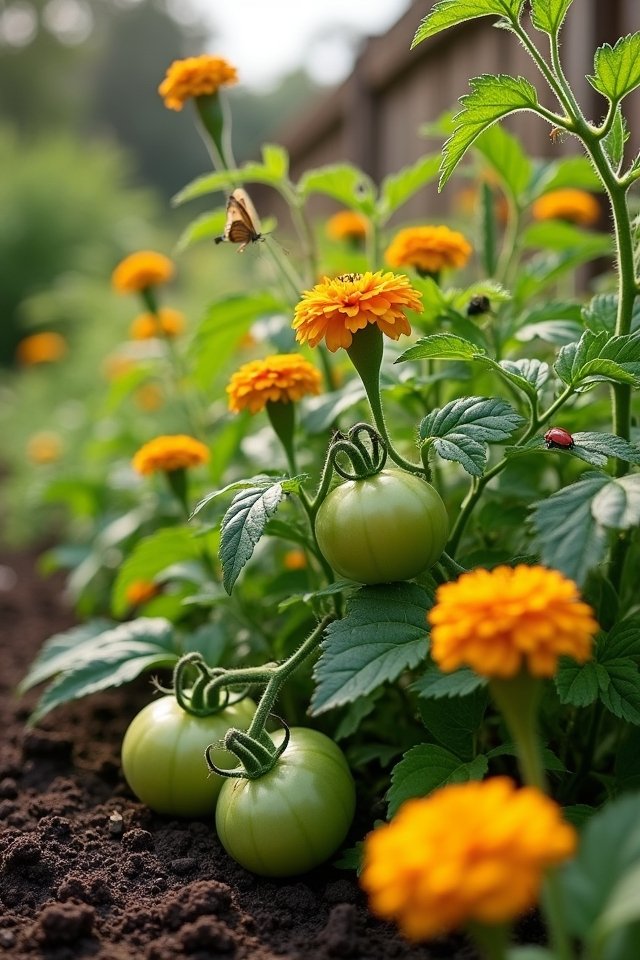
Certain plant partnerships work wonders not just for growth but for protecting your garden from pesky intruders! By letting nature do its thing, you can harness the power of companion plants. Here’s how they deter pests:
- Pest repelling herbs like basil and mint release scents that confuse and repel unwanted bugs.
- Natural insecticides from plants such as marigolds contain compounds deterring common pests like aphids and nematodes.
- Allies such as garlic act as a strong shield—those powerful odors can keep even the most determined pests at bay!
Enhancing Biodiversity in Small Gardens
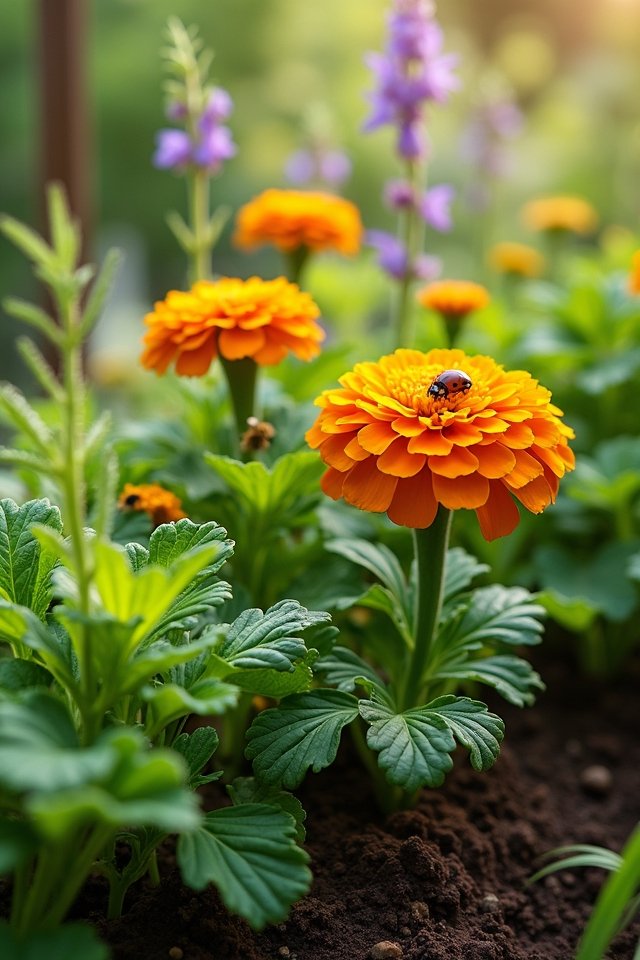
If you’ve ever walked through a lush, buzzing garden, you know the magic of diversity! Imagine combining vibrant flowers with leafy greens, creating a feast for both your eyes and your pollinators. By enhancing biodiversity in your small garden, you’re not just inviting bees, butterflies, and beneficial insects, but also boosting soil health. When you mix plants, you naturally attract these helpful critters that deliver an ongoing pollinator attraction! Plus, with diverse roots mingling below, your soil becomes a rich tapestry of nutrients. It’s like hosting a garden party—everyone’s invited to make things lively! Why limit yourself to just a few varieties? Welcome innovation, and watch as your little paradise transforms into a thriving ecosystem, buzzing with life!
Tips for Successful Companion Planting
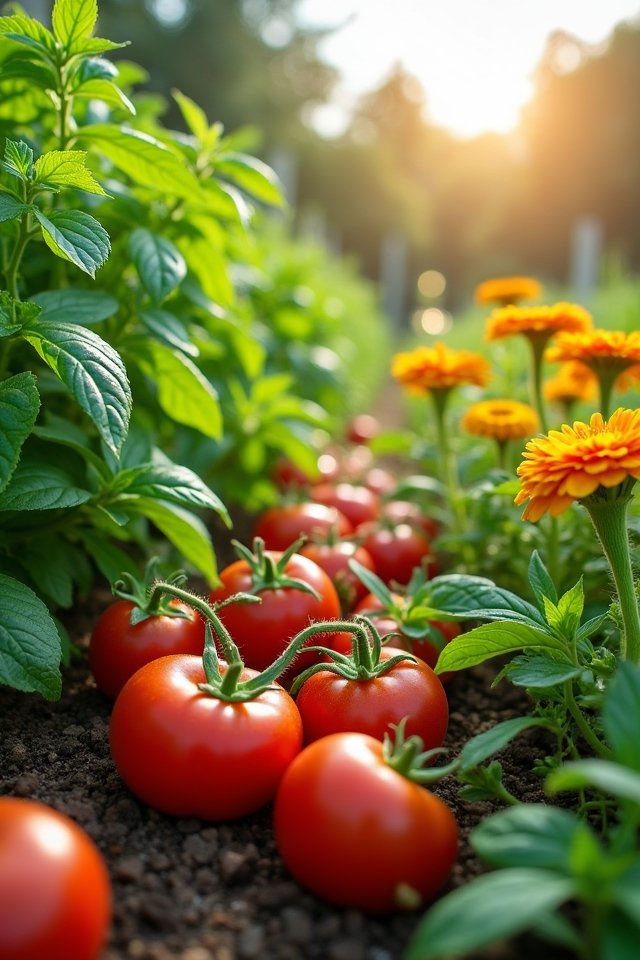
When you immerse yourself in the world of companion planting, you’ll discover a delightful dance between plants that goes beyond mere aesthetics! To keep this gardening duet harmonious, you need to focus on a few key elements:
- Plant selection: Choose partners wisely! For instance, tomatoes and basil are a match made in gardening heaven. They enhance each other’s growth and flavor.
- Soil compatibility: Verify your plants share similar soil needs. Deep-rooted carrots love light, loose soil, while leafy greens thrive in richer earth.
- Timing: Don’t rush the waltz! Planting at the right time helps your plants flourish together.
Frequently Asked Questions
Can Companion Planting Reduce the Need for Chemical Pesticides?
Absolutely, companion planting can really cut down your need for chemical pesticides! Think of marigolds as nature’s little bodyguards, warding off pesky aphids while your tomatoes thrive. When you mix plants like basil with tomatoes, you’re inviting natural pest deterrents into your garden. It’s like a tasty culinary duo that protects each other! Embracing these organic gardening practices not only keeps your plants happy but also gives you peace of mind. Isn’t that brilliant?
How Does Companion Planting Affect Soil Health Over Time?
Ever wonder how companion planting boosts your garden’s soil health? Well, it’s like tossing a fabulous party for soil biodiversity! When different plants mingle, they boost nutrient cycling, making your soil richer and more vibrant. For instance, legumes fix nitrogen, while their buddies enhance root structure, helping everything flourish! You’ll notice healthier plants and fewer pests, making your green space a thriving ecosystem. Isn’t it fun to see nature working together?
Are There Specific Companion Plants for Vegetable Gardens?
You’ll love the vibrant synergy of specific vegetable pairings! Think of tomatoes cozied up with basil—this dynamic duo not only tastes great together but repels pesky insects too! Or how about planting carrots alongside onions? Those onions can deter carrot flies! Plus, marigolds sprinkled throughout your garden can attract beneficial bugs. These companion plant benefits create a flourishing paradise! Ready to experiment with your vegetable garden and watch it thrive? Let’s dig in!
Is Companion Planting Effective in Indoor Gardening?
Did you know indoor herbs can thrive 25% better when paired with the right companions? Yes, it’s true! In your cozy indoor garden, plants like basil love sharing space with tomatoes, as they both enjoy similar light requirements. Imagine the fresh aroma wafting through your home! Plus, it’s like giving your plants a buddy system—they’ll keep pests at bay while you sip your herbal tea. So, why not immerse yourself in this botanical adventure?
Can Companion Planting Help Attract Beneficial Insects?
Companion planting can totally help attract beneficial insects, like ladybugs and lacewings, that feast on pests. Imagine this: marigolds blooming beside your veggies, giving off scents that draw in pollinators. You’ll see bees buzzing happily around, making your garden a lively place! By creating a welcoming environment, you’re not just growing plants; you’re cultivating a mini-ecosystem that benefits everyone! So why not give it a go? Your garden will thank you!